
Disclosure: This post contains affiliate links. We may earn a commission at no extra cost to you. Our research is independent and unbiased.
Editorial Note: This article was researched with AI assistance and reviewed by licensed veterinary and insurance professionals before publication.
The Best Dog Harnesses: A Veterinarian’s Guide to Safety and Injury Prevention
A vet tech's blunt advice on why collars are a choking hazard, and the best dog harnesses to prevent thousands in emergency vet bills.

Dr. Sarah Chen
Licensed Veterinarian, DVM
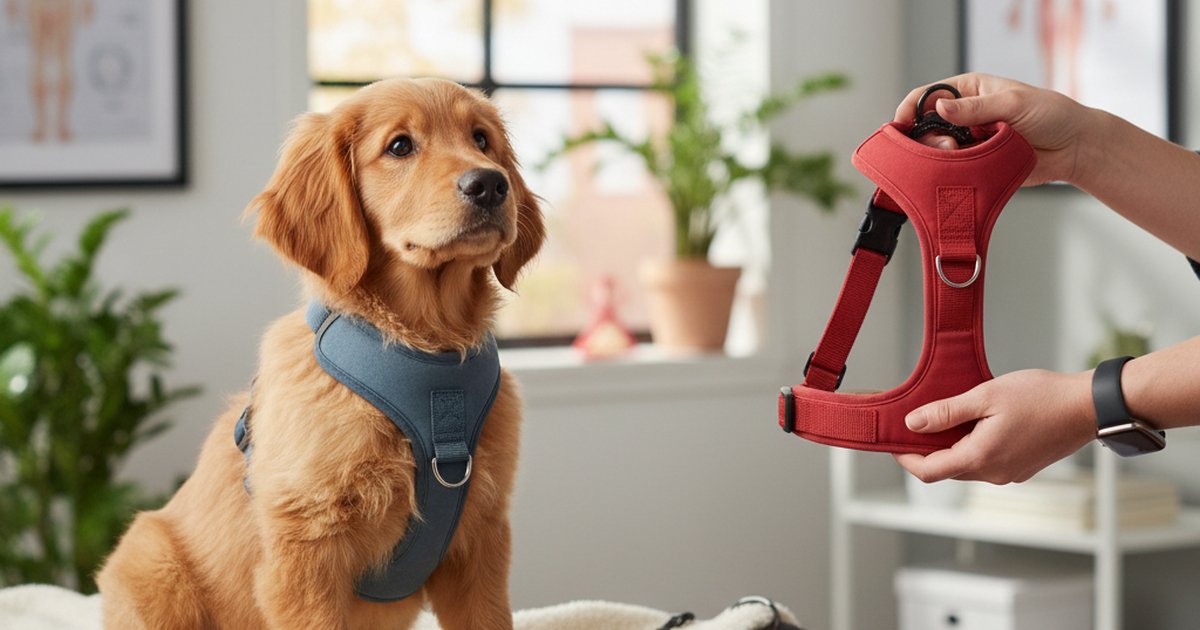
If there’s one sound I hear in my sleep after 15 years as an emergency vet tech, it’s the “goose honk” cough of a dog with a collapsed trachea.
Almost every day, owners come rushing through our hospital doors with a dog that is gasping, choking, or suddenly paralyzed. And a heartbreaking number of these emergencies start with the exact same thing: a simple walk around the block using a regular neck collar.
A lot of pet parents think harnesses are just a trendy accessory or a training tool. In reality, working in ER medicine has taught me that the right harness is cheap preventative healthcare. Collars are for holding ID tags. Period. If you clip a leash to a collar, you are playing Russian roulette with your dog’s airway and spine.
Let’s talk about the ugly medical realities of poor walking gear, review the harnesses we actually trust in the clinic, and look at how dropping $30 to $100 right now can save you thousands in emergency vet bills—and save your pet from going under the knife.
The Brutal Medical Cost of Poor Walking Gear
Before we look at the gear, you need to understand exactly what happens under your dog’s skin when they hit the end of the leash on a neck collar. It’s not just a little coughing; it’s blunt force trauma to the trachea, jugular vein, and cervical spine.
- Tracheal Collapse: This is the big one for Yorkies, Pugs, Chihuahuas, and Pomeranians. Their windpipes are fragile. Pulling on a collar crushes the cartilage rings until the airway flattens out like a squashed drinking straw. To fix it, a surgeon has to go in and place a mesh stent just so the dog can take a full breath of air again. Average ER Bill: $3,000 to $6,500.
- Intervertebral Disc Disease (IVDD): We see this constantly in Dachshunds and Frenchies. That sudden jerk on the neck causes the jelly-like discs in their spine to rupture and crush the spinal cord. One minute they are chasing a squirrel, the next they are dragging their paralyzed back legs. Fixing this means literally cutting into the spine to relieve the pressure. Average ER Bill: $4,000 to $8,000 for the MRI and surgery.
- Ocular Issues: If you have a flat-faced (brachycephalic) breed like a Bulldog or Boston Terrier, pulling on a collar spikes the pressure in their head. I’ve seen dogs come in with eyes literally bulging out (proptosis) or worsening glaucoma simply because they pulled too hard on a walk. Average ER Bill: $1,500 to $3,000.
Good pet insurance (like Trupanion or Nationwide) will absolutely soften the financial blow for these nightmares. But preventing the trauma is always the better choice. I’d much rather you spend money on a good harness than hold your crying dog in my exam room.
The 5 Best Dog Harnesses for Safety and Comfort
We see a lot of gear in the clinic. Based on what actually distributes weight safely and what holds up in the real world, here are the ones we constantly recommend.
1. Best Everyday Harness: Ruffwear Front Range
The Ruffwear Front Range is our go-to recommendation for 90% of dogs. The padded chest plate takes all the force and spreads it evenly across the sturdy ribs, keeping it completely away from the throat.
- Key Feature: Two leash attachment points (an aluminum ring on the back and a reinforced loop on the chest).
- Why Vet Techs Love It: The Y-shape at the neck sits low on the chest. Even if your dog lunges at a skateboard, there is zero pressure on the windpipe.
- Average Price: $49.95
2. Best for Pullers: PetSafe Easy Walk No-Pull Harness
If your dog pulls like a freight train and your shoulder is paying the price, get the Easy Walk. Back-clip harnesses can actually trigger an “opposition reflex,” making stubborn dogs pull harder (think sled dogs). This one clips in the front.
- Key Feature: A front-chest loop that gently turns the dog back toward you when they pull.
- Why Vet Techs Love It: It gives you steering control without choking them. It saves your rotator cuff and completely spares their neck.
- Average Price: $23.00
3. Best for Small Breeds: Puppia Soft Dog Harness
Small breeds have little bird bones in their necks. The Puppia Soft Harness feels like a breathable, squishy vest rather than a bunch of rigid straps.
- Key Feature: A soft, step-in or over-the-head design with no harsh nylon edges digging into their armpits.
- Why Vet Techs Love It: It completely bypasses the danger zones on tiny dogs like Chihuahuas and Yorkies, putting the tension squarely on their chest.
- Average Price: $18.00
4. Best for Escape Artists: Ruffwear Web Master
Some dogs—especially anxious rescues or slick sighthounds like Greyhounds—are Houdinis at backing out of regular harnesses. An escaped dog often ends up as a “Hit By Car” (HBC) case in our ER, and those are some of the bloodiest, most heartbreaking, and most expensive nights we have.
- Key Feature: A five-point adjustment system and a secondary belly strap that makes slipping out virtually impossible.
- Why Vet Techs Love It: Besides preventing escapes, it has a sturdy handle on the back. We use these constantly to help lift older, arthritic dogs or dogs recovering from knee surgeries into cars.
- Average Price: $60.00
5. Best for Car Safety: Sleepypod Clickit Sport
Most people don’t realize their flimsy walking harness will snap instantly in a car crash. The Sleepypod Clickit Sport is one of the rare harnesses actually crash-tested by the Center for Pet Safety.
- Key Feature: A heavy-duty design that integrates right into your car’s seatbelt.
- Why Vet Techs Love It: In a 30 mph wreck, a 50-pound dog turns into a 1,500-pound projectile. This harness stops them from launching through the windshield and protects the human passengers, too.
- Average Price: $103.00
Harness Cost and Feature Comparison
| Harness Model | Best For | Key Safety Feature | Est. Price |
|---|---|---|---|
| Ruffwear Front Range | Everyday Walks | Y-shape protects trachea | ~$50 |
| PetSafe Easy Walk | Heavy Pullers | Front-clip stops choking | ~$23 |
| Puppia Soft Harness | Small/Toy Breeds | Squishy mesh prevents chafing | ~$18 |
| Ruffwear Web Master | Escape Artists | Secondary belly strap | ~$60 |
| Sleepypod Clickit | Car Travel | Actual crash-testing | ~$103 |
How the Right Harness Impacts Your Pet Insurance
Let’s talk money, because economic euthanasia (putting a dog down solely because the owner can’t afford the vet bill) is the worst part of my job. You might wonder how a simple $50 harness relates to your pet insurance policy. It’s all about keeping cash in your pocket.
When you buy a policy from Lemonade, Embrace, or Pets Best, you pick a deductible (usually $250 to $500) and a reimbursement rate (usually 70% to 90%).
If your dog backs out of a cheap collar, gets spooked, and breaks a leg, the orthopedic surgery could easily hit $5,000. Even with a great policy covering 90%, you still have to pay your $500 deductible and the 10% co-insurance. That’s $1,000 out of your own pocket.
Spending $60 on an escape-proof Ruffwear Web Master makes that terrible scenario disappear.
Also, look into wellness add-ons. Embrace’s Wellness Rewards is a reimbursement program that can sometimes cover training tools depending on how they get billed. Regular accident and illness policies won’t buy your dog’s daily gear, but the reality is simple: the best way to handle an insurance claim is to prevent the injury so you never have to file one.
The Blunt Truth
As someone who works in the trenches of vet med, my direct advice to you is this: take the leash off your dog’s collar today. Put their ID tags on the collar, and get a harness for walking.
- Got a heavy puller? Get the PetSafe Easy Walk.
- Got a fragile little breed? Get the Puppia Soft Harness.
- Just need a solid everyday option? Grab the Ruffwear Front Range.
Get the gear to protect them on the sidewalk, and get a solid pet insurance policy (check out Lemonade, Pets Best, or Trupanion) for everything else. Give yourself the peace of mind knowing you’ve done everything right.
Frequently Asked Questions
Does pet insurance cover the cost of a dog harness?
Normal pet insurance won't pay for your everyday walking harness. But if your dog has a major surgery and needs a medical mobility harness (like the Help 'Em Up harness to literally lift their back end), companies like Trupanion or Pets Best sometimes cover it under physical therapy riders. Embrace's Wellness Rewards might also reimburse you for certain training gear.
Why do veterinarians recommend harnesses over collars?
Because walking a puller on a collar is like dragging someone by their throat. All that force hits their fragile windpipe and spine. It causes severe, preventable emergencies like collapsed tracheas, ruptured spinal discs, and even eyes bulging out of their sockets (especially in flat-faced breeds).
What happens if my dog escapes their harness and gets hit by a car?
Hit-by-car (HBC) traumas are the absolute worst cases we see in the ER. If your dog slips out and gets hit, a good policy from Nationwide or Lemonade will help cover the $10,000+ vet bill, minus your deductible and co-pay. But honestly? Getting a truly escape-proof harness is your best bet so you never have to make that panicked drive to the ER in the first place.