
Disclosure: This post contains affiliate links. We may earn a commission at no extra cost to you. Our research is independent and unbiased.
Editorial Note: This article was researched with AI assistance and reviewed by licensed veterinary and insurance professionals before publication.
The Best Dog Insurance for Senior Dogs: An ER Vet Tech's Honest Guide
An ER vet tech's blunt, empathetic guide to finding the best dog insurance for senior dogs, so you never have to choose between your wallet and your best...

Alex Carter
Veterinary Medicine Expert
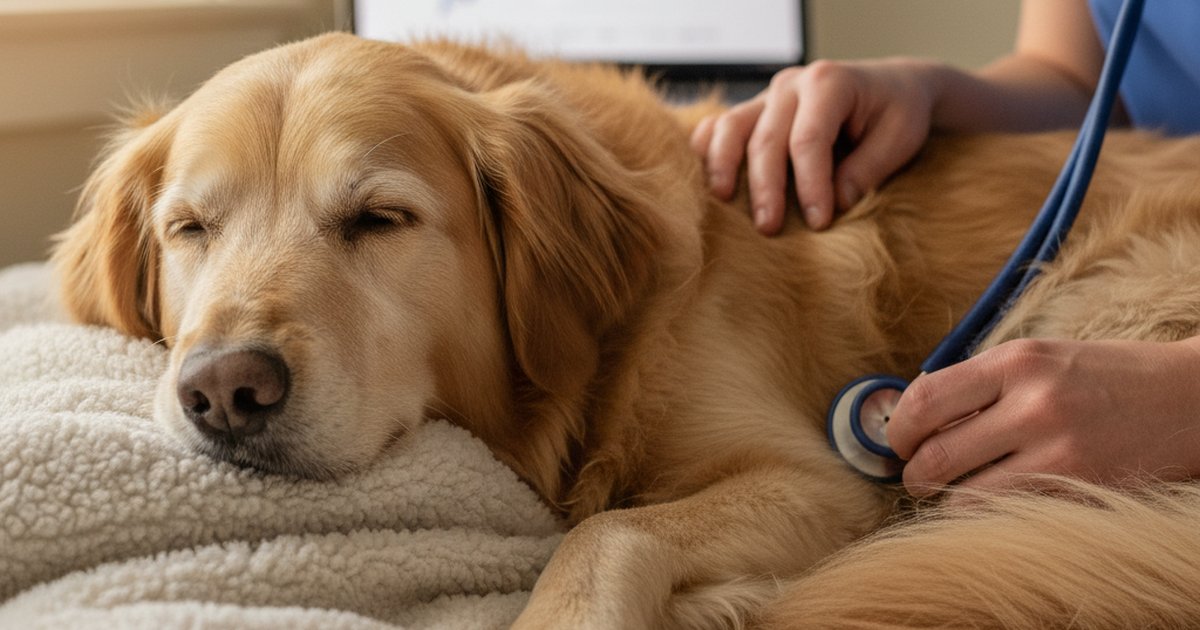
I love senior dogs. I love their frosted faces, their lumpy, lipoma-covered bodies, and even that distinct, slightly funky “old dog breath.” There is a specific kind of quiet loyalty in a dog that has spent a decade sleeping at the foot of your bed.
But as a veterinary assistant with 15 years in high-volume emergency animal hospitals, I also know the dark side of loving an old dog. The midnight pacing. The sudden refusal to eat. The terrified look in an owner’s eyes when they carry their collapsed 11-year-old Golden Retriever through our sliding glass doors at 2 AM.
And then comes the part of my job I hate the most: handing over the estimate.
I’ve watched owners empty their 401(k)s. I’ve watched people max out five different credit cards. And, far too often, I’ve had to hold a gray-muzzled paw while the dog slipped away, simply because the owner couldn’t afford the $5,000 surgery to save them. We call it “economic euthanasia.” It is devastating, it is entirely real, and it is the exact reason I tell every pet parent to get insurance.
Finding the best dog insurance for senior dogs is tricky. The premiums are higher, the rules are stricter, and the clock is ticking. Let’s cut through the marketing fluff and talk about what you actually need to protect your old friend.
The Medical Reality of the Senior Dog
When your dog hits their senior years (around age 7 for large breeds, 10 for small breeds), their body starts to break down. This isn’t a possibility; it’s a biological guarantee.
Here is what we see in the ER, and what you are actually paying for when you buy an insurance policy:
The Bleeding Spleen (Hemangiosarcoma)
This is a classic senior dog emergency, especially in Labs, Shepherds, and Golden Retrievers. A tumor grows silently on the spleen until, one day, it ruptures. Your dog’s abdomen starts filling with blood. Their gums go ghost-white, and they collapse.
To save them, we have to do an emergency splenectomy. We cut open the belly, find the massive, bleeding organ, clamp off the major blood vessels, and remove the spleen entirely to stop them from bleeding to death internally. The ER Cost: $5,000 to $8,000.
Bloat and Torsion (GDV)
Gastric Dilatation-Volvulus happens when the stomach fills with gas and twists on itself, cutting off the blood supply. The dog’s stomach looks like a tight drum, and they will retch without throwing anything up. If we don’t operate immediately, the stomach tissue dies, and the dog goes into shock. The surgery involves untwisting the stomach and physically suturing it to the abdominal wall so it can’t twist again. The ER Cost: $4,000 to $7,000.
Chronic Osteoarthritis
This isn’t an emergency, but it’s a massive financial drain. Your dog’s cartilage wears away, leaving bone grinding on bone. They struggle to stand up on hardwood floors. Managing this requires monthly NSAIDs (like Galliprant), joint supplements, and expensive monthly injections like Librela to block the pain signals. The Annual Cost: $1,000 to $2,500 every single year.
If you don’t have $8,000 sitting in a savings account right now, you need pet insurance. Period.
The Blunt Truth About Pre-Existing Conditions
Before we look at the companies, you need to understand the golden rule of pet insurance: Nobody covers pre-existing conditions.
If your dog limped three years ago and the vet wrote “suspect early arthritis” in their chart, no insurance company will pay for their Librela injections today. If they had a urinary tract infection last month, any kidney issues that pop up next month will likely be denied as pre-existing.
This is why you must enroll your senior dog today, before the next weird lump appears or the next blood test comes back with elevated liver enzymes.
Reviewing the Providers: Who Actually Helps Senior Dogs?
I process insurance claims every single day. I know which companies make owners jump through hoops and which ones actually pay out when a dog is fighting for its life in the ICU. Here is how the big players stack up for older dogs.
Embrace: Best for Diminishing Deductibles
Embrace is generally my top pick for senior dogs. They will enroll dogs up to 14 years old for full illness and accident coverage. If your dog is 15 or older, they only offer accident-only coverage, which is fair.
What makes Embrace great for old dogs is their “Healthy Pet Deductible.” Every year you don’t file a claim, your deductible drops by $50. By the time your dog hits their heavy-medical senior years, your deductible might be zero. They also cover exam fees if you select that add-on, which is massive when an ER exam alone costs $150-$200 before we even touch the dog.
Trupanion: Best for Chronic Illnesses
Trupanion does things differently. Instead of an annual deductible, they use a “per-condition” deductible. If your senior dog develops diabetes, you pay the deductible once for that specific disease, and Trupanion covers 90% of the costs for the rest of the dog’s life.
The catch? Trupanion has a strict upper age limit of 14 years for new enrollments. Also, their monthly premiums for an older dog are going to make you gasp. It is expensive. But if your 9-year-old dog develops a chronic heart condition requiring thousands of dollars in cardiology workups and daily meds for the next four years, Trupanion pays for itself tenfold.
Pets Best: Best for Budget-Conscious Owners
If you are looking at the premiums for Trupanion and feeling sick to your stomach, look at Pets Best. They have no upper age limits for enrollment, meaning you can insure your 13-year-old mutt today.
They offer very customizable plans, allowing you to lower the annual payout limit or raise the deductible to get a monthly premium you can actually afford. The downside? They are notoriously slow at processing claims. You might be waiting four to six weeks to get your $4,000 back after a surgery. If you can handle the wait, the coverage is solid.
Lemonade: Fast but Restrictive
Lemonade is incredibly fast. I’ve seen owners get reimbursed on their phones before they even leave our hospital lobby. However, they are tough on senior dogs. They often cap new enrollments around age 14 (depending on the breed), and they are incredibly strict about requiring recent medical records before they pay out a dime. If you have an 8-year-old dog, Lemonade is a great option. If you have a 13-year-old dog, look elsewhere.
Nationwide: The Corporate Juggernaut
Many people get Nationwide through their employer benefits. If your job offers it, take it. But be warned: Nationwide often uses a “benefit schedule.” This means instead of paying 90% of your actual vet bill, they pay a flat, predetermined amount for a specific condition. If we charge $5,000 for a splenectomy, but Nationwide’s schedule says a splenectomy is only worth $2,500, you are on the hook for the rest. Read the fine print.
Is Accident-Only Coverage Worth It?
If your dog is 14 years old, riddled with arthritis, and already has a heart murmur, full illness coverage is either going to be denied or cost $200+ a month.
In these cases, I highly recommend an Accident-Only policy. These plans are cheap (often $15 to $30 a month) and ignore illness-based pre-existing conditions. If your deaf, half-blind 14-year-old dog gets attacked by a coyote in the yard, or falls down the stairs and breaks a femur, an accident-only policy will cover the massive surgical repair. It provides a safety net for the catastrophic trauma events without charging you for the illnesses your dog already has.
My Final Advice from the ER Floor
Do not wait until your dog is sick. Do not wait until they start slowing down.
Every single shift, I have to look an owner in the eye and ask them how much money they are willing to spend to keep their best friend alive. It is a terrible, unfair question.
Pick a provider—Embrace for the deductible perks, Pets Best for the budget, or an accident-only plan if your dog is already ancient. Get the policy active today. Let the waiting period expire while your dog is still happily sleeping on the couch.
Buy the insurance. Buy the peace of mind. Let me and my team focus on saving your dog’s life, rather than worrying about whether or not your credit card will decline.
Frequently Asked Questions
Can I get pet insurance if my senior dog already has health issues?
Yes, but here is the hard truth: no pet insurance covers pre-existing conditions. If your dog already has arthritis documented in their chart, their joint care won't be covered. But that policy will still cover them when they inevitably eat a sock or develop an entirely new issue like kidney failure or a bleeding spleen.
Is there an age limit for enrolling an older dog?
It depends heavily on the provider. Lemonade and Trupanion often have upper age limits for new enrollments (usually around 14 years old), while companies like Embrace and Pets Best will insure dogs of any age, though they might restrict you to accident-only policies once your dog passes a certain milestone.
Are premium spikes normal as my dog gets older?
Absolutely. Just like human health insurance, the older the body, the higher the risk. Expect your premiums to increase every year. You are paying for the statistical likelihood that a 12-year-old dog will need an emergency room visit compared to a 2-year-old dog. It's expensive, but it's cheaper than a sudden $6,000 surgical bill.