
Disclosure: This post contains affiliate links. We may earn a commission at no extra cost to you. Our research is independent and unbiased.
Editorial Note: This article was researched with AI assistance and reviewed by licensed veterinary and insurance professionals before publication.
Cat Insurance for Pre-Existing Conditions: The Brutal Truth from an ER Vet Tech
Got a cat with a medical history? Don't panic yet. Here is exactly how pet insurance handles pre-existing conditions and how to protect your wallet.

Alex Carter
Veterinary Medicine Expert
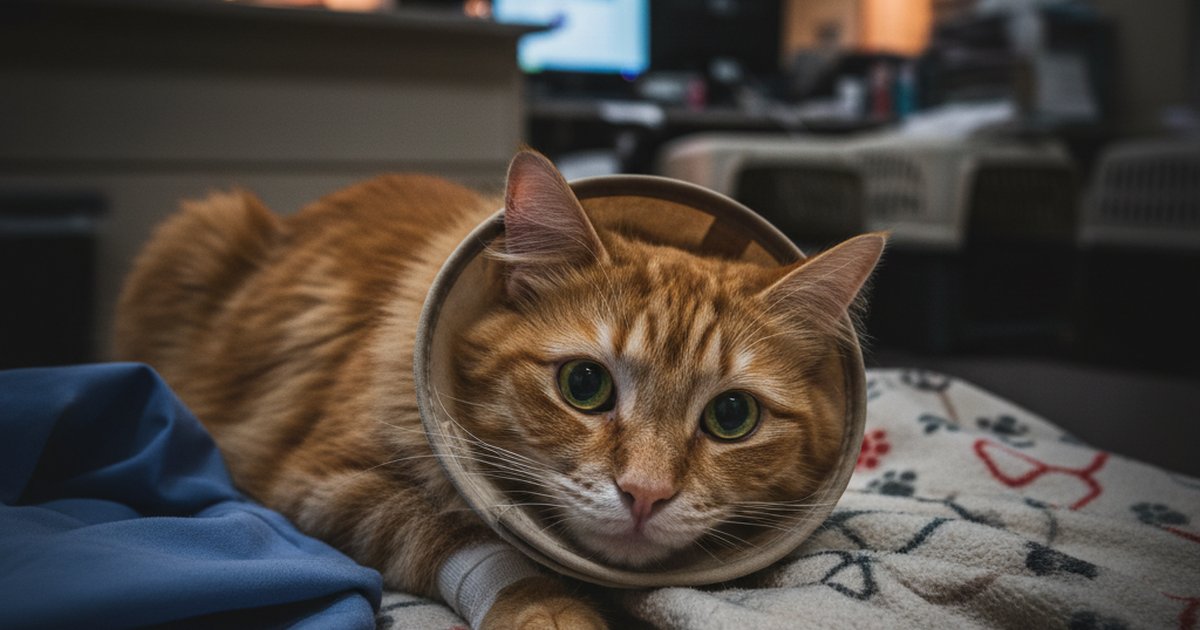
In my 15 years working the floor of a high-volume emergency animal hospital, I’ve seen exactly what happens when love collides with a maxed-out credit card. There is a specific, agonizing silence in Exam Room 3 when I hand an owner a treatment estimate for $3,500.
Usually, it’s the middle of the night. The owner is exhausted, and their male cat is in the back treatment area, yowling in pain. The cat is “blocked”—his urethra is plugged with microscopic crystals and mucus, meaning urine is backing up into his kidneys. The $3,500 estimate covers heavy sedation, passing a tiny catheter to flush out the gritty sludge, and keeping him hospitalized on IV fluids for three days so his bladder doesn’t rupture and flood his abdomen with deadly toxins.
Then comes the dreaded question: “Will my pet insurance cover this?”
If you bought the policy yesterday, the answer is no. If he had a history of bloody urine a year ago and you just bought the policy last week, the answer is still probably no.
When owners can’t afford the bill and don’t have coverage, we face “economic euthanasia”—putting a highly treatable animal to sleep simply because the money isn’t there. It is the absolute worst part of my job. I’ve held the paws of countless cats during their final moments because of it.
If your cat has a medical history, you need to understand exactly how pet insurance handles pre-existing conditions. The rules are strict, but there are loopholes, exceptions, and strategies that can save your cat’s life. Let’s get into the dirty details.
What Insurance Companies Actually Mean by “Pre-Existing”
Pet owners often think a pre-existing condition means a formal diagnosis, like a vet officially stamping “Feline Asthma” on a medical chart.
Insurance companies do not see it that way.
To an insurance adjuster, a pre-existing condition is any symptom noted in your cat’s medical record before your policy’s waiting period expires.
If you take your cat to the vet because she’s drinking a lot of water and leaving massive clumps in the litter box, and the vet writes “Owner reports increased thirst” in the chart, you are on the hook. Even if the vet doesn’t officially diagnose Chronic Kidney Disease (CKD) until three months later, the insurance company will look at that chart, see the early symptom, and deny your claim.
The “Curable” Loophole: Your Best Friend
Here is the good news: not all pre-existing conditions are treated equally. The pet insurance industry generally splits them into two categories: Incurable and Curable.
Curable conditions are temporary health hiccups. Think of an upper respiratory infection (URI) where your cat is sneezing thick green snot and needs a round of antibiotics. Or a basic ear infection caused by yeast. Or a bout of vomiting from eating a houseplant.
Many top-tier insurance companies—like Embrace, Lemonade, and Pets Best—will forgive curable pre-existing conditions if your cat goes a certain amount of time without showing symptoms or receiving treatment.
For example, Embrace requires a 365-day symptom-free streak. Lemonade generally looks for a 180-day to 365-day clear period, depending on the state and the specific condition. If your cat had a UTI two years ago, was treated, and hasn’t had an issue since, these companies will cover a brand-new UTI if it pops up today.
The Incurable Heavy Hitters
Then we have the incurable conditions. These are the chronic diseases that require lifelong management. If your cat shows symptoms of these before your insurance waiting period is up, no standard policy will ever cover the vet visits, diagnostics, or medications related to that disease.
Here is what these look like medically and financially:
Feline Lower Urinary Tract Disease (FLUTD)
If your cat has chronic urinary crystals or inflammation, they are a ticking time bomb for a blockage. Managing this requires prescription diets (like Hill’s c/d or Royal Canin SO), which cost about $80 a bag. If they block, you’re looking at $2,000 to $4,000 per ER visit. If they block repeatedly, we have to perform a Perineal Urethrostomy (PU) surgery—literally amputating the penis and widening the urethra so they can pee like a female. That surgery runs $4,000 to $6,000.
Chronic Kidney Disease (CKD)
You’ll know this by the smell. Cats in kidney failure develop “uremic breath,” which smells faintly of ammonia. Their kidneys are shrinking and failing to filter toxins out of the blood. Managing CKD means routine bloodwork ($200-$300 a pop), blood pressure medications, and eventually teaching you how to stick a needle under your cat’s skin at home to administer Sub-Q fluids to keep them hydrated.
Feline Diabetes
Usually seen in overweight cats. They crash, their blood sugar spikes, and they require hospitalization to stabilize. Long-term, you are looking at buying insulin (like ProZinc or Lantus), syringes, and paying for frequent “glucose curves” at the vet to monitor their levels. You can easily spend $1,500 a year just keeping a diabetic cat stable.
Feline Asthma
This looks like your cat crouching low to the ground, stretching their neck out like a goose, and making a harsh hacking sound as they try to pull air into inflamed, constricted lungs. Treatment often requires an inhaler (like Flovent) administered through an Aerokat chamber. Those inhalers regularly cost over $200 a month.
Can You Get Coverage for a Cat That Is Already Sick?
If your cat already has one of the chronic heavy hitters, you might feel completely defeated. But there is one major exception in the industry: AKC Pet Insurance.
AKC Pet Insurance (administered by PetPartners) is one of the only providers that offers coverage for incurable pre-existing conditions. The catch? There is a strict 365-day waiting period. You have to pay your premiums for a full year before they will start reimbursing you for the pre-existing issue. If you have a young cat recently diagnosed with asthma or early-stage kidney disease, eating the cost for a year to get lifetime coverage afterward is an incredibly smart financial move.
Real Talk: Why You Still Need the Policy
I hear this all the time in the ER: “My cat already has diabetes, so insurance won’t cover it. There’s no point in buying a policy.”
This is a massive mistake.
Just because your cat has diabetes does not make them immune to the chaos of being an animal. A diabetic cat can still swallow a sewing needle attached to a thread, requiring a $4,000 emergency abdominal surgery to keep the string from sawing through their intestines. An asthmatic cat can still get outside, get hit by a car, and need a $5,000 orthopedic surgery to fix a shattered pelvis.
If you have a policy with Trupanion or Nationwide, they will absolutely deny the diabetes or asthma claims, but they will step up and pay 90% of that $4,000 foreign body surgery. Insurance is there to protect you from the catastrophic, unexpected emergencies that force you to choose between your wallet and your pet’s life.
My Advice from the ER Floor
Insurance companies are businesses. They exist to manage risk, and paying out for a disease your cat already has is bad business for them. But as a pet owner, you have to play the game to protect your animal.
Here is my direct advice:
- Insure them the day you adopt them. Do not wait to see if they are a “healthy” cat. Kittens are cheap to insure. Lock in the coverage before they develop a single symptom of anything.
- Ask for a Medical Record Review. If you are switching insurance companies or buying a policy for an older cat, ask the insurance company to do a formal medical record review before you ever file a claim. Companies like Embrace offer this. They will look at your vet records and tell you exactly what they consider pre-existing in writing. No surprises, no denied claims at midnight in the ER.
- Don’t let a pre-existing condition stop you from getting coverage. Even if your cat’s hyperthyroidism is excluded, that policy is your safety net for cancer, broken bones, and accidental poisonings.
I never want to see you in Exam Room 3, crying over an estimate you can’t afford. Get the policy. Put it on auto-pay. And let the ER staff do what we do best: save your cat’s life without having to ask how much money is in your checking account.
Frequently Asked Questions
Will any pet insurance cover my cat's diabetes?
Standard pet insurance won't cover a chronic, incurable condition like diabetes if the symptoms started before your policy. However, AKC Pet Insurance is a rare exception that offers coverage for pre-existing conditions after a strict 365-day waiting period.
What if my cat had a UTI two years ago?
Most providers, like Embrace and Lemonade, consider a basic UTI a 'curable' pre-existing condition. If your cat has been completely symptom-free and off all urinary medications for 6 to 12 months (depending on the provider), they will cover future UTIs.
Should I still get insurance if my cat already has kidney disease?
Absolutely. Cats with chronic kidney disease can still swallow a sewing needle, get hit by a car, or develop hyperthyroidism. Insurance won't pay for the kidney meds or sub-Q fluids, but it will save you from a $4,000 emergency surgery bill for something entirely unrelated.