
Disclosure: This post contains affiliate links. We may earn a commission at no extra cost to you. Our research is independent and unbiased.
Editorial Note: This article was researched with AI assistance and reviewed by licensed veterinary and insurance professionals before publication.
Chinchilla & Hedgehog Insurance: Covering the Cost of Specialized Care
Vet tech review of chinchilla and hedgehog care costs. From dental surgery to neurological issues, learn why specialized insurance is a lifesaver i...

Pet Insurance Guide Research Team
Independent Analysts
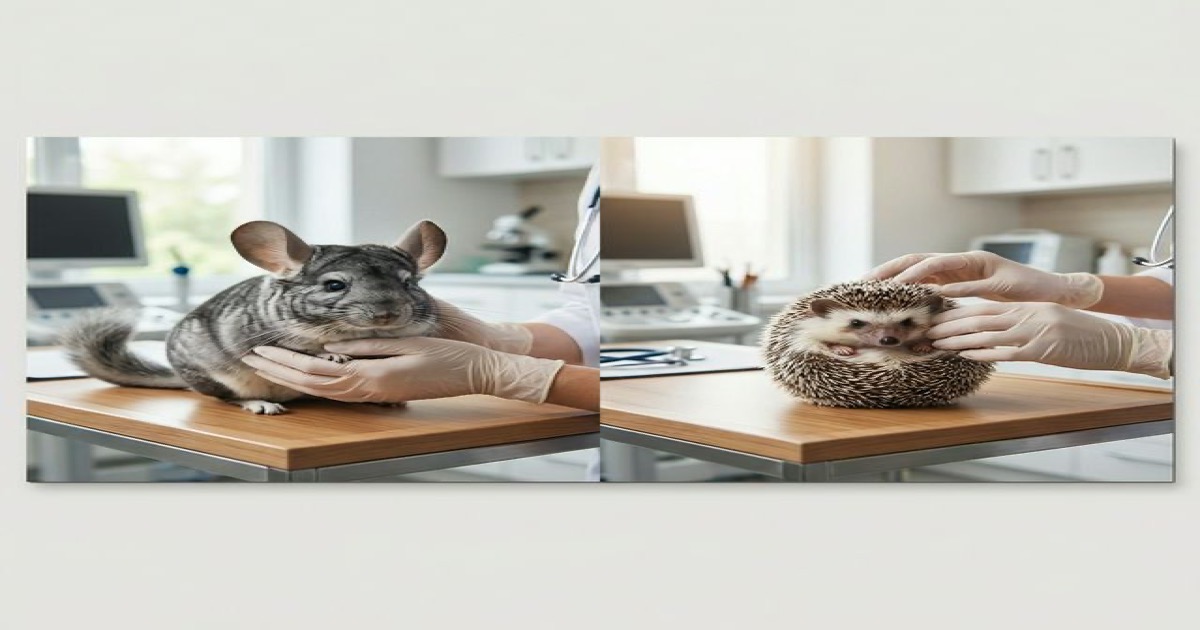
I’ve been a vet tech in emergency animal hospitals for 15 years, and I can tell you right now: the smaller the pet, the more specialized the medicine. People bring home a hedgehog or a chinchilla thinking they’re just cute, low-maintenance cage dwellers. Then reality hits. Hedgehogs are masters at hiding pain until it’s an absolute crisis, and chinchillas are basically fragile little dust-bathers with teeth that never stop growing.
When things go wrong—and they will—you aren’t just paying a regular vet. You’re paying for an exotic specialist. I’ve had to hold the hands of too many sobbing owners who had to choose “economic euthanasia” simply because they couldn’t afford a $2,000 emergency bill for a pet that cost them $150. Don’t put yourself in that position. Let’s talk about what actually goes wrong with these little guys and why having coverage is your only real safety net.
🦔 Hedgehogs: Prickly Masters of Disguise
Hedgehogs are prey animals, which means they will hide their illness until they literally cannot function. By the time you notice something is off—maybe they aren’t unrolling, or they’re dragging a leg—it’s already a serious emergency.
1. Wobbly Hedgehog Syndrome (WHS)
You’ll see them start to stumble or drag their hind legs. It’s a degenerative neurological condition that affects about 10% of hedgehogs.
- The Reality: It’s heartbreaking to watch. While we can’t cure WHS, we have to run expensive diagnostics to make sure it isn’t something we can fix, like a massive inner-ear infection or a tumor pressing on a nerve.
- The Bill: Between the specialized exotic exam, sedation (because try examining an angry, rolled-up ball of spikes awake), and X-rays, you’re looking at $400 to $800 just for answers.
2. Squamous Cell Carcinoma (Oral Tumors)
For some reason, hedgehogs are incredibly prone to mouth cancer. You might notice them dropping food, bleeding from the gums, or pawing at their face.
- The Reality: Getting in there to surgically remove the mass and sending it off for a biopsy is delicate, microscopic work to give them any quality of life back.
- The Bill: Surgery and pathology easily hit $800 to $1,500.
3. Eye Injuries
Their eyes physically bulge out of their heads. Between poking themselves on their own quills or getting scratched by bedding, eye injuries are a weekly occurrence in the ER.
- The Reality: Sometimes we can save the eye with special fluorescent stains and intensive antibiotic drops. Often, the eye is too far gone and we have to perform an enucleation (surgically removing the eyeball so they aren’t in agonizing pain).
- The Bill: Anywhere from $200 for basic drops and exams to $1,000 for surgical removal.
🐭 Chinchillas: The 15-Year Dental Disaster
Chinchillas can live 15 to 20 years. That is a massively long time for things to go wrong, particularly with their teeth and their incredibly fragile skeletons.
1. Malocclusion (The Root Nightmare)
Unlike rabbits, when a chinchilla’s teeth overgrow, the roots don’t just grow down—they can grow upwards directly into their eye sockets or nasal cavities.
- The Reality: It causes weeping eyes and makes it excruciating for them to chew. To even see what’s happening, we have to put them under and do a CT scan. The dental surgery to file or remove these teeth is incredibly specialized and risky.
- The Bill: A tiny CT scan alone will run you $800+. Add complex dental surgery on top of that, and you’re staring down a $2,000 invoice.
2. Heat Stroke
These guys have the densest fur in the animal kingdom (up to 80 hairs per follicle!). If your AC breaks and the house gets over 75°F, they will literally cook in their own coats.
- The Reality: They come into the ER completely limp and gasping. We have to rush them into oxygen cages, administer IV cooling fluids, and hospitalize them. It is absolute panic.
- The Bill: Emergency stabilization and hospitalization rarely cost less than $1,000.
3. Fur Slip and Fragile Bones
If a kid grabs them too roughly, or they get spooked, they will shed massive patches of fur to escape. Worse, their bones are the thickness of toothpicks.
- The Reality: Fixing a shattered chinchilla leg isn’t just throwing a cast on it. It requires an orthopedic surgeon placing microscopic pins into a bone that wants to splinter into dust.
- The Bill: Specialized orthopedic repair is easily $1,500 to $2,500.
🛡️ The Blunt Truth: Is Insurance Worth It?
If you have a Chinchilla: Absolutely. Statistically, if they live their full 15 to 20 years, you will face a catastrophic dental issue or a heat emergency. It’s not an ‘if’, it’s a ‘when’.
If you have a Hedgehog: Yes. Their lifespan is much shorter (usually 3 to 5 years), but those years are packed with high-intensity, expensive medical needs like cancer surgeries and neurological diagnostics.
Don’t wait until you’re sitting in my ER at 2 AM, crying over an estimate you can’t afford. Get the exotic coverage now, pay the monthly premium, and buy yourself the peace of mind that you’ll never have to choose between your wallet and your pet’s life.
Related Articles
- Guinea Pig Insurance Guide
- Rabbit Insurance Worth It
- Best Exotic Pet Insurance 2026
- Chinchilla Insurance Guide
- Hedgehog Insurance Cost
- Nationwide Exotic Insurance Review
Related Guides
- Is Pet Insurance Worth It?
- Pet Insurance Cost Guide
- Insurance vs. Savings
- Best Pet Insurance for Cats
Frequently Asked Questions
What is Wobbly Hedgehog Syndrome?
It's awful—a progressive nerve disease that eventually causes paralysis. While we can't cure it, having coverage means we can afford the expensive diagnostics to rule out treatable things like severe ear infections or tumors, and keep your prickly buddy comfortable for as long as possible.
Do Chinchillas need dental insurance?
Absolutely. Their teeth never stop growing, and malocclusion (when the teeth don't line up) is the number one nightmare we see in the ER. It's not a one-and-done fix; it's an expensive, ongoing battle to keep them eating.
Are these considered 'Pocket Pets'?
In the insurance world, yes. But 'pocket pet' makes them sound cheap to fix—they aren't. They usually fall under the 'Exotic' or 'Small Mammal' policies, mainly through providers like Nationwide.