Disclosure: This post contains affiliate links. We may earn a commission at no extra cost to you. Our research is independent and unbiased.
Editorial Note: This article was researched with AI assistance and reviewed by licensed veterinary and insurance professionals before publication.
Does Pet Insurance Cover Emergency Vet Visits?
Midnight ER runs are terrifying and expensive. After 15 years in the vet ER, here is the blunt truth about what pet insurance covers when disaster strikes.

Alex Carter
Veterinary Medicine Expert
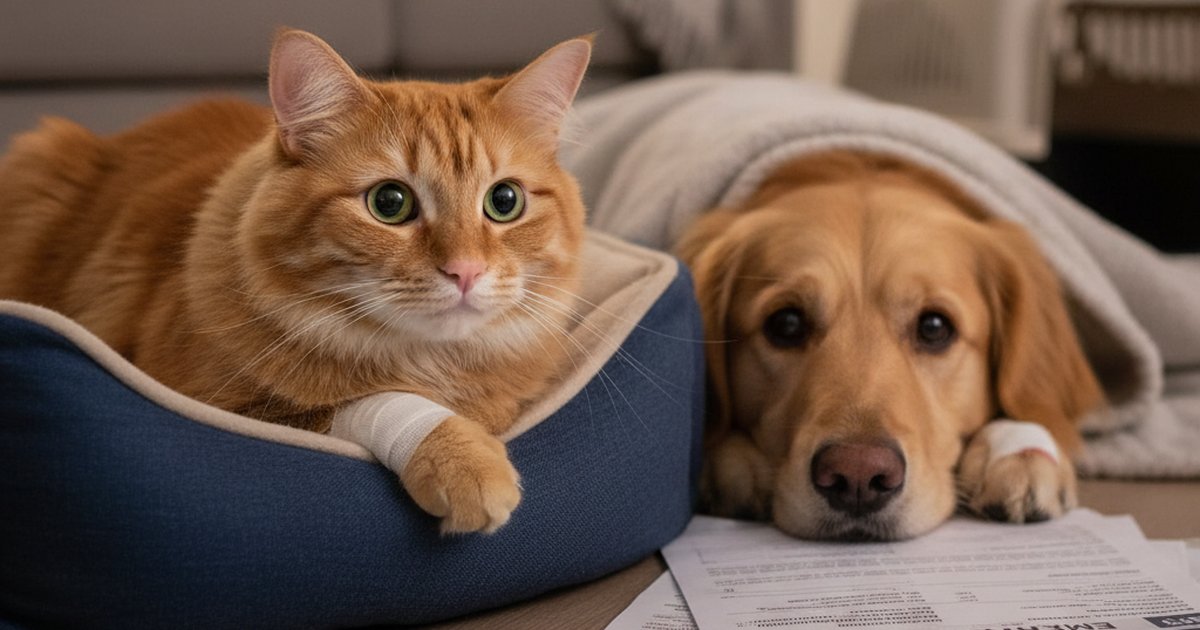
It is 2:00 AM on a Tuesday. The fluorescent lights in the waiting room are buzzing, and the air smells like a mix of bleach, anal glands, and pure panic. Your dog is pacing, dry-heaving, and his stomach looks like a tight drum.
We rush him to “the back,” get him on oxygen, and place an IV catheter. A few minutes later, I walk out to the lobby holding a clipboard. I have been an emergency veterinary assistant for 15 years, and this is the absolute worst part of my job. I have to slide a piece of paper across the counter with a low-end estimate of $5,000 and a high-end of $8,000 to save your dog’s life.
You freeze. You start doing mental math. You wonder if you have enough room on your credit cards.
This is the exact moment people ask me, “Does pet insurance cover emergency vet visits?”
The short answer is yes. If you have an active accident and illness policy, emergency visits are absolutely covered. But you need to understand exactly how that coverage works before you are standing at my front desk at 2:00 AM, crying over a piece of paper.
The Reality of Emergency Vet Costs
People are often shocked by ER prices. I get it. But an animal ER is a fully staffed, functioning trauma center. We have oxygen cages, digital x-ray machines, surgical suites, and blood-typing kits ready to go 24/7/365.
When things go wrong, they get expensive fast. Here is what we see every single week, what it means for your pet, and what it costs.
The Swallowed Object (Foreign Body Obstruction)
Golden Retrievers and Labradors are notorious for this. They eat a sock, a corn cob, or a squeaker toy. It gets stuck in the intestines. The gut tries to push it through, fails, and the tissue around the blockage starts to turn black and die.
To fix this, our surgeon has to cut your dog open, slice into the intestines, pull the rotting object out, and often cut away the dead sections of the bowel before sewing it back together. The Cost: $3,000 to $6,000.
The Blocked Cat (Feline Urethral Obstruction)
Male cats get stressed, or eat a poor diet, and form microscopic crystals in their urine. These crystals mix with mucus and form a plug in the narrowest part of their urethra. They literally cannot pee. Toxins build up in their bloodstream, their potassium spikes, and within 48 hours, their heart will stop.
We have to sedate them, push a catheter through the blockage to flush it out, and hospitalize them on IV fluids for a few days to flush the kidneys. The Cost: $1,500 to $3,500.
The Twisted Stomach (GDV / Bloat)
This is the 2:00 AM scenario I mentioned earlier. Deep-chested dogs like Great Danes or German Shepherds have stomachs that can suddenly fill with gas and flip over on themselves. It cuts off the blood supply to the stomach and the spleen. It is agonizing, and it is fatal within hours if we do not cut them open, untwist the stomach, and staple it to the abdominal wall so it can never flip again. The Cost: $5,000 to $9,000.
If you have a standard accident and illness pet insurance policy through companies like Embrace, Pets Best, Nationwide, or Lemonade, the diagnostics, the surgery, the anesthesia, the IV fluids, and the hospitalization for all of these emergencies are covered.
How Pet Insurance Actually Works at 2 AM
Here is the dirty detail that catches a lot of owners off guard: pet insurance is property insurance. That means it operates on a reimbursement model.
When I hand you that $6,000 estimate for your dog’s bloat surgery, my hospital still needs a deposit (usually 50% to 100% of the low end) before we cut. We do not bill your insurance company. You pay us, we save your dog, and then you submit the final invoice to your insurance company. They mail you a check or direct deposit the money into your account a few days later.
You still need a way to float that initial bill. Most of our clients use CareCredit (a medical credit card), a regular high-limit credit card, or an emergency savings fund.
The Trupanion Exception
There is one major exception to the reimbursement rule. Trupanion has a software system called Vet Direct Pay. If our ER is set up with their software (and many are), we can submit the claim right there at the front desk. Within five minutes, Trupanion tells us they will cover 90% of the bill. You only pay your deductible and the remaining 10% out of pocket before you leave. If you don’t have a lot of credit available, this feature is a literal lifesaver.
What ER Costs Are NOT Covered?
While the bulk of a massive trauma bill is covered, insurance companies have specific rules.
The Emergency Exam Fee
Just walking through the doors of a 24-hour animal hospital costs money. Our ER exam fee is $185. Some insurance policies cover this automatically. Others, like Lemonade and Pets Best, require you to select an “Exam Fee Coverage” rider when you build your policy. If you didn’t check that box, they will pay for the $4,000 broken leg repair, but you are eating that $185 door charge.
Pre-Existing Conditions
This breaks my heart on a weekly basis. A client brings in a French Bulldog that can’t breathe. The dog needs airway surgery to widen its nostrils and remove excess tissue from its throat so it can finally take a full breath of air.
The owner says, “I just bought insurance yesterday!”
I have to tell them it won’t work. Every pet insurance company has a waiting period (usually 14 days for illnesses). Furthermore, if your vet records show your Frenchie has been snoring and struggling to breathe for three years, the insurance company will classify it as a pre-existing condition and deny the $5,000 surgery claim. You cannot buy car insurance after you wrap your car around a telephone pole, and you cannot buy pet insurance in the ER waiting room.
The Reality of Economic Euthanasia
I promised to be blunt with you, so here it is.
“Economic euthanasia” is the term we use when an animal has a highly treatable, totally curable condition, but the owner simply cannot afford the thousands of dollars required to fix it. The only humane option left to stop the animal’s suffering is euthanasia.
I have held the paw of a two-year-old Golden Retriever while the vet pushed the pink juice, simply because he ate a towel and his family didn’t have $4,000 for the surgery. I have watched grown men collapse on the floor of our grief room, sobbing, because they couldn’t afford to unblock their cat.
It destroys the owners, and frankly, it destroys the veterinary staff. We go into this field because we love animals. Bagging up a young, otherwise healthy dog because of money is a trauma that stays with you.
Pet insurance is not an investment strategy. You aren’t buying it to “make your money back.” You are buying peace of mind. You are paying a monthly premium so that if you ever find yourself standing in my ER at 2:00 AM, looking at a $7,000 estimate, your only question is, “Will my dog be okay?” instead of “How am I going to pay for this?”
My Advice from the ER Floor
If you have a pet, especially a puppy, a purebred with known health issues, or a cat prone to urinary issues, get insurance right now. Today.
Look at companies like Trupanion if you want direct payment at the hospital. Look at Embrace or Lemonade if you want customizable deductibles to keep your monthly premium low. Just make sure you get an “Accident and Illness” plan, not just a wellness plan (wellness plans only cover vaccines and checkups, they will do nothing for you in the ER).
Do not wait until your dog is throwing up chunks of a tennis ball. Do not wait until your cat is crying in the litter box. Get the coverage while they are young and healthy. I promise you, the monthly premium is infinitely easier to swallow than the guilt of an ER bill you can’t afford.
Frequently Asked Questions
Will pet insurance pay the emergency vet directly?
Usually, no. Most pet insurance works on a reimbursement model, meaning you pay the ER upfront and the insurance pays you back a few days later. Trupanion is the main exception—they have software that can pay participating ERs directly at checkout, so you only pay your portion.
Does pet insurance cover the $200 emergency exam fee?
It depends entirely on your policy. Companies like Lemonade and Pets Best offer exam fee coverage as an optional add-on. If you didn't check that box when you signed up, they will cover the $3,000 surgery, but you are still on the hook for the $200 door charge.
Can I buy pet insurance while I am sitting in the emergency room?
You can buy it, but it won't cover the emergency you are currently sitting there for. Every pet insurance policy has a waiting period (usually 2 to 14 days for accidents) and excludes pre-existing conditions. You have to buy it before the bad thing happens.