Disclosure: This post contains affiliate links. We may earn a commission at no extra cost to you. Our research is independent and unbiased.
Editorial Note: This article was researched with AI assistance and reviewed by licensed veterinary and insurance professionals before publication.
The True Cost of Friskies Dry Cat Food: An ER Vet Tech's Warning
Feeding cheap dry kibble might save you money now, but an ER visit for a blocked cat costs thousands. Here is why pet insurance is your ultimate safety net.

Alex Carter
Veterinary Medicine Expert
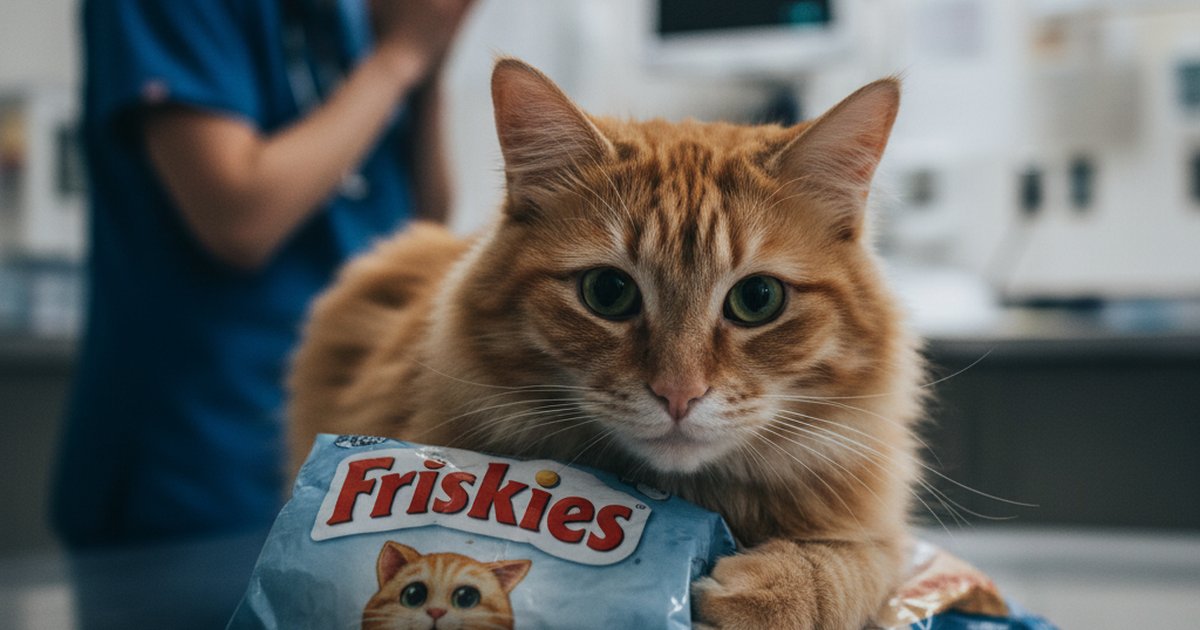
It’s 2:00 AM on a Tuesday. The ER waiting room smells like bleach, wet dog, and pure anxiety. A young couple rushes through the double doors clutching a plastic laundry basket lined with towels. Inside is a three-year-old male orange tabby, screaming a low, guttural yowl that makes the hair on my arms stand up.
“He keeps going to the litter box but nothing is coming out,” the owner says, her voice shaking. “He threw up twice, and now he’s just crying.”
I gently palpate the cat’s abdomen. His bladder feels like a rock-hard baseball. He is “blocked”—a complete urethral obstruction. It is a fatal emergency.
While I rush the cat to the treatment area to get him on oxygen and an ECG, the vet asks the owners the standard history questions. When she gets to diet, the answer is one I hear at least three times a week: “He just eats Friskies dry cat food. The seafood mix.”
I have been a veterinary assistant in high-volume emergency hospitals for 15 years. I know how tight money is right now. Grabbing a giant bag of Friskies at the grocery store for $15 feels like a win for your wallet. But I need to be completely honest with you: that cheap dry kibble is a ticking time bomb for your cat’s urinary tract, and if you don’t have pet insurance, it might end up costing your cat his life.
The Dirty Details of a “Blocked” Cat
Cats are descended from desert hunters. They have an incredibly low thirst drive because nature designed them to get their water directly from the bodies of the mice and birds they eat. Dry kibbles like Friskies contain only about 10% moisture. Worse, budget kibbles are packed with cheap carbohydrates, plant-based proteins, and high levels of ash and minerals.
When a cat eats a dry, highly processed diet, their urine becomes highly concentrated. The excess minerals from the cheap food start to bind together in this concentrated urine, forming struvite crystals. Think of it like microscopic shards of glass floating around in your cat’s bladder.
These crystals irritate the bladder lining, causing inflammation, mucus, and bleeding. Eventually, the mucus, blood clots, and crystal grit clump together into a plug. In male cats, the urethra narrows right at the tip of the penis. That gritty plug gets stuck. Now, the cat cannot pee at all.
What Unblocking Actually Looks Like
When a blocked cat hits my treatment table, we are fighting the clock. Because the urine has nowhere to go, it backs up into the kidneys. Potassium levels in the blood skyrocket, which will eventually stop the cat’s heart.
Fixing this isn’t a simple squeeze of the bladder. We have to heavily sedate your incredibly sick, unstable cat. We take a rigid, tiny plastic tube (a tomcat catheter) and force it through a swollen, spasming urethra to flush the grit back into the bladder. Sometimes it feels like trying to push a wet noodle through a brick wall.
Once we break through, the urine that spills out into the collection bowl looks like dark cherry soda mixed with beach sand. We then suture the catheter to the cat’s prepuce (yes, we sew it to the skin) so it stays in place for a few days while we flush his bladder with IV fluids.
The Heartbreak of the Estimate
This brings us to the absolute worst part of my job. While the cat is getting stabilized, I have to walk into the exam room and hand the owners a treatment estimate.
An unblocking procedure, complete with bloodwork, sedation, IV fluids, pain injections, and a two-to-three-day hospital stay, easily runs between $1,800 and $3,500.
If the cat blocks again—which happens frequently with severe crystal formation—he will need a Perineal Urethrostomy (PU surgery). That is a major procedure where a surgeon amputates the penis and creates a new, wider urinary opening so he pees more like a female. That surgery is another $4,000 to $6,000.
I watch the blood drain from owners’ faces. I watch them pull out credit cards that get declined. I watch them sob into their hands because they only have $300 in their checking account.
And then, we have to talk about “economic euthanasia.” Putting a young, otherwise healthy animal to sleep simply because the family cannot afford the medical bill. It is soul-crushing. I have held the paws of hundreds of cats as they slipped away, all because a cheap bag of food led to a bill the owners couldn’t pay.
Why Pet Insurance is Mandatory for Kibble Feeders
If you feed your cat Friskies, Meow Mix, Cat Chow, or any other budget dry food, you are playing Russian roulette with their urinary tract. You might be saving $40 a month on pet food, but you are setting yourself up for a $3,000 ER visit.
This is exactly why pet insurance is not a luxury; it is a necessity.
If those owners at 2:00 AM had a policy with companies like Lemonade, Pets Best, or Embrace, that $3,500 estimate wouldn’t have been a death sentence. They would pay their $250 deductible, and the insurance would reimburse 80% to 90% of the remaining bill.
How Insurance Changes the Conversation in the ER
When I ask an owner in the ER, “Do you have pet insurance?” and they say “Yes,” my entire body physically relaxes.
It means we don’t have to cut corners. We don’t have to skip the post-unblocking bloodwork to save a few bucks. We don’t have to send the cat home a day early just to keep the invoice down, risking a re-blockage. We get to practice the gold standard of veterinary medicine, and the owner gets to focus entirely on their cat’s recovery instead of their draining bank account.
If your cat ends up needing that $5,000 PU surgery to widen their urinary tract, policies from providers like Trupanion or Nationwide will cover it, provided the urinary issues weren’t a pre-existing condition before you signed up. That is the catch: you have to get the insurance before your cat starts crying in the litter box. Once they have a documented urinary issue, no insurance company will cover it.
The Long-Term Fallout: Diabetes and Kidney Disease
Urinary blockages aren’t the only risk of a Friskies dry diet. As cats age on these high-carb, low-moisture diets, we see massive spikes in two other horribly expensive conditions:
- Feline Diabetes: Cats are obligate carnivores. Their bodies aren’t meant to process the massive carbohydrate load found in cheap kibble. They get obese, their pancreas gives out, and suddenly you are giving insulin shots twice a day. Managing a diabetic cat costs thousands of dollars a year in insulin, syringes, and continuous glucose monitors.
- Chronic Kidney Disease (CKD): A lifetime of mild, chronic dehydration from eating dry food forces the kidneys to work in overdrive to conserve water. Over the years, the kidney tissue scars and fails. Treating CKD requires expensive subcutaneous fluids, regular blood panels, and specialized diets.
Pet insurance covers the diagnostics, the ongoing bloodwork, and the medications for both of these chronic, progressive diseases.
My Advice from the Trenches
I love animals, and I want your cat to live a long, comfortable life purring on the foot of your bed.
If you can afford to upgrade your cat’s diet to a high-quality canned wet food, do it today. The moisture alone will do wonders for flushing their bladder and protecting their kidneys. If you absolutely must feed budget dry food because that is what you can afford right now, I understand. Life is incredibly expensive.
But if you are feeding Friskies dry food, you must protect yourself from the medical fallout. Get pet insurance today. Lock in a policy while your cat is young and healthy. Pay the $20 or $30 a month. Consider it part of your cat’s monthly food budget.
Do not wait until you are standing in my ER at 2:00 AM, staring at a $3,000 estimate, wishing you had a safety net. Buy the insurance, so if the worst happens, the only thing you have to say to me is, “Do whatever it takes to save him.”
Frequently Asked Questions
Will pet insurance cover a urinary blockage if I feed my cat Friskies?
Yes, as long as your cat didn't have a documented history of urinary issues before you bought the policy. Pet insurance covers unexpected illnesses, including urinary obstructions caused by diet, but they won't cover pre-existing conditions.
Is wet food really that much better than dry food for cats?
Absolutely. Cats are naturally desert animals with a low thirst drive; they are designed to get their moisture from their prey. Even the cheapest canned food provides more vital hydration than a premium dry kibble, helping constantly flush the bladder.
Does pet insurance pay for prescription urinary diets?
Most standard policies do not cover the cost of prescription food. However, some companies, like Trupanion, will cover a portion of the cost of a prescription diet if it's strictly for treating a specific medical condition like urinary crystals. Always check the fine print.