Disclosure: This post contains affiliate links. We may earn a commission at no extra cost to you. Our research is independent and unbiased.
Editorial Note: This article was researched with AI assistance and reviewed by licensed veterinary and insurance professionals before publication.
Friskies Pate Cat Food: The Wet Food Debate and the $3,500 ER Bill You Aren't Ready For
Feeding your cat Friskies pate? Let's talk about feline hydration, urinary blockages, and why cheap wet food won't save you from a midnight ER vet bill.

Alex Carter
Veterinary Medicine Expert
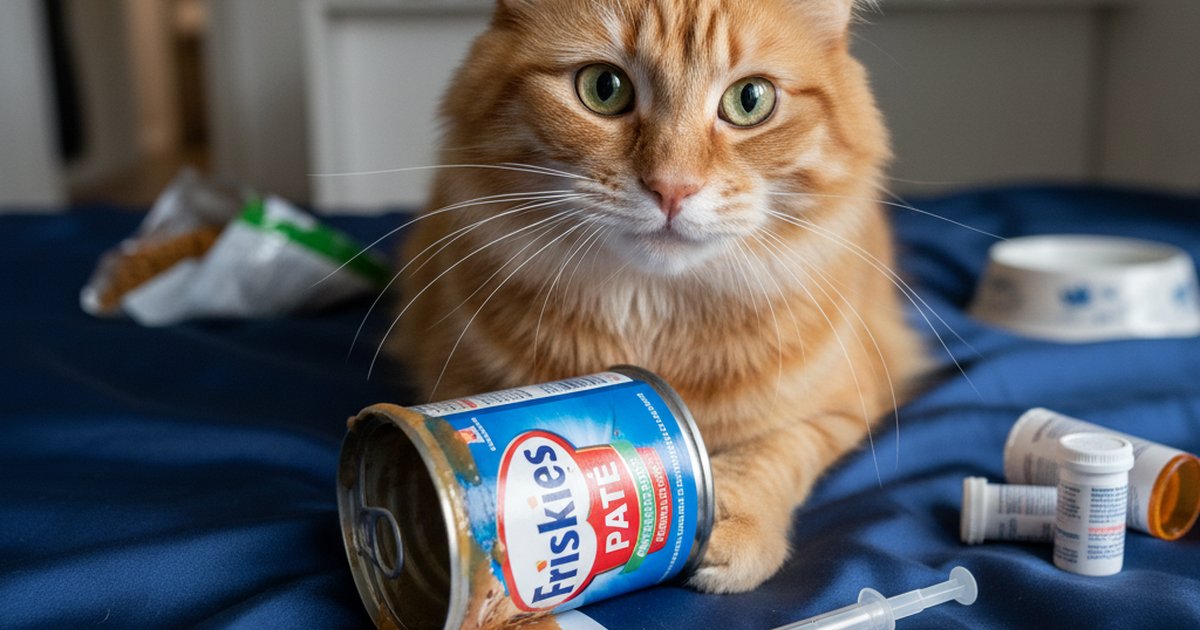
It’s 2:15 AM on a Tuesday. The ER lobby smells like bleach, fear, and concentrated cat urine. A frantic owner rushes through the sliding glass doors holding a plastic carrier. Inside, a three-year-old orange tabby is yowling—a deep, guttural sound that makes the hair on my arms stand up.
“He keeps going to the litter box but nothing is coming out,” the owner cries. “I don’t understand, I feed him wet food! I give him Friskies pate every single day!”
I’ve heard this exact sentence hundreds of times over my 15 years in veterinary emergency rooms. The owner is doing their best. They know wet food is good for cats. They buy Friskies pate because it’s affordable, their cat loves it, and they’ve read online that the moisture helps prevent urinary issues.
They aren’t wrong. But as I rush that yowling tabby to the treatment area, I know what’s coming next. I know the medical reality of a blocked urethra, and more importantly, I know the financial gut punch this owner is about to take.
Let’s talk bluntly about your cat’s diet, the nightmare of urinary blockages, and why saving money on cat food means absolutely nothing if you don’t have a safety net for the vet bill.
The Friskies Pate Defense: Why Moisture is Life
Let me set the record straight right now: I am not here to shame anyone for feeding their cat Friskies. In the veterinary world, there is a lot of debate about premium versus budget diets. But when you work in the ER, you look at things practically.
Cats evolved from desert-dwelling ancestors. They have a naturally low thirst drive. If you feed a cat exclusively dry kibble, they live in a state of chronic, mild dehydration. Their urine becomes highly concentrated. In male cats, whose urethras are incredibly narrow (about the width of a pinhole), this concentrated urine allows microscopic minerals to clump together into struvite or calcium oxalate crystals.
Those crystals mix with mucus in the bladder to form a plug. That plug gets lodged in the urethra. Suddenly, your cat cannot pee.
Feeding your cat a wet diet like Friskies pate is actually a smart, budget-friendly defense mechanism. Canned pate is about 78% water. It literally forces your cat to “eat” their water, flushing out the bladder and keeping the urine dilute. I will take a cat eating cheap grocery store pate over a cat eating $80-a-bag premium dry kibble any day of the week.
But here is the dirty detail: Wet food is not a forcefield.
Genetics, obesity, and feline stress (like moving furniture, a new baby, or a stray cat outside the window) can trigger inflammation in the bladder. Even on a Friskies pate diet, male cats still get blocked. And when they do, the clock starts ticking.
The Medical Reality of a “Blocked Tom”
When a cat’s urethra is blocked, the bladder continues to fill with urine from the kidneys. It swells up like a water balloon trapped inside their abdomen. It is agonizingly painful.
Because the urine has nowhere to go, the toxins the kidneys are trying to filter out start backing up into the bloodstream. The cat’s potassium levels spike. This toxic potassium level slows the heart down. Without intervention, a blocked cat will suffer a painful, terrifying death within 48 to 72 hours.
Fixing this isn’t a simple matter of giving them a pill. Here is exactly what my team has to do:
- We pull blood to check how close the cat’s heart is to stopping.
- We heavily sedate or fully anesthetize the cat.
- The vet painstakingly passes a tiny, rigid plastic catheter up the tip of the penis to dislodge the grit and push the plug back into the bladder.
- We flush the bladder repeatedly with sterile saline until the fluid runs clear instead of looking like cranberry juice.
- We suture that catheter to the cat’s prepuce (yes, we sew it to their genitals) and attach it to a collection bag.
- The cat stays in the hospital on IV fluids for 2 to 3 days to flush the toxins out of their blood and ensure the urethra doesn’t immediately spasm shut again.
The $3,500 Estimate and the Heartbreak of Economic Euthanasia
Now comes the part of my job I hate the most. I have to take a clipboard with the treatment plan into the exam room.
The breakdown looks like this:
- ER Exam: $150 - $200
- Bloodwork & Urinalysis: $300 - $450
- Sedation, Catheterization, and X-rays: $800 - $1,200
- 48-72 Hours Hospitalization, IV Fluids, Medications: $1,500 - $2,500
The total estimate is usually between $2,800 and $4,300.
I hand the clipboard to the owner who buys Friskies because they are trying to stick to a budget. I watch their face fall. I watch the panic set in. I watch them pull out their phone to check their bank account, knowing full well the money isn’t there.
This is where “economic euthanasia” happens. It’s the ugliest phrase in veterinary medicine. It means putting an otherwise young, healthy, fixable animal to sleep simply because the owner cannot afford the medical bill. I have bagged too many beautiful, sweet cats and put them in the freezer because an owner didn’t have $3,500 lying around at 2 AM.
The Only Safety Net That Works
If you are feeding your cat an affordable diet to manage your household budget, you are doing the right thing for your wallet. But you must take a fraction of the money you save on cat food and put it toward pet insurance.
Pet insurance is not a luxury; it is a literal lifeline.
If the owner with the orange tabby had a policy with Lemonade or Pets Best, that $3,500 bill would be 80% to 90% covered. They would pay their $250 deductible, and the insurance would reimburse them for the rest. Instead of crying over a euthanasia consent form, they would be kissing their cat on the head and telling us to do whatever it takes to save him.
If you have a policy through Trupanion, it gets even better. Trupanion has software that integrates directly with many emergency hospitals. At checkout, they pay the hospital directly. You don’t even have to put that massive $3,500 charge on your credit card and wait for a reimbursement check. You just pay your portion and walk out.
For a young adult indoor cat, a solid pet insurance policy usually costs between $20 and $30 a month. That is roughly the cost of a single 24-pack of Friskies pate.
My Advice from the ER Floor
Keep feeding the wet food. Hydration is key to your cat’s urinary health, and if Friskies pate fits your budget and keeps your cat eating, I fully support it.
But do not trick yourself into thinking diet alone makes your cat invincible. Cats hide illness until they are in absolute crisis. When that crisis hits, it happens in the middle of the night, on a weekend, when your primary vet is closed and the ER is your only option.
Get your cat insured today. Do it while they are healthy, before they have a documented history of urinary crystals (because insurance will not cover pre-existing conditions). Protect your pet, protect your bank account, and give yourself the peace of mind that if you ever end up in my ER lobby at 2 AM, the only thing you have to worry about is comforting your cat.
Frequently Asked Questions
Is Friskies pate actually good for my cat's urinary health?
As an ER vet tech, I'll tell you a secret: I would much rather see a male cat eating a budget-friendly wet food like Friskies pate than an expensive, premium dry kibble. Cats are famously bad at drinking water. The high moisture content in any canned pate helps flush their bladder and dilute their urine, which is your first line of defense against urinary crystals.
If I feed my cat wet food, can he still get a urinary blockage?
Yes. While wet food drastically lowers the risk, stress, genetics, and idiopathic cystitis can still cause a male cat to block. I've unblocked plenty of cats who eat a strict wet food diet. That's why you need a pet insurance policy in your back pocket.
Which pet insurance is best for indoor cats?
For indoor cats, you want a policy with a good emergency payout. Lemonade and Pets Best offer great, affordable coverage for younger cats (often under $25 a month). Trupanion is fantastic because they can often pay the ER directly at the front desk, meaning you don't have to front the $3,500 to unblock your cat.