Disclosure: This post contains affiliate links. We may earn a commission at no extra cost to you. Our research is independent and unbiased.
Editorial Note: This article was researched with AI assistance and reviewed by licensed veterinary and insurance professionals before publication.
Gemtesa and Your Pet: Accidental Poisoning, Off-Label Prescriptions, and Insurance
Whether your dog ate your Gemtesa or your vet prescribed it for severe incontinence, here is the gritty truth about the costs and how pet insurance helps.

Alex Carter
Veterinary Medicine Expert
If you are reading this, you are probably dealing with one of two very stressful, very messy scenarios.
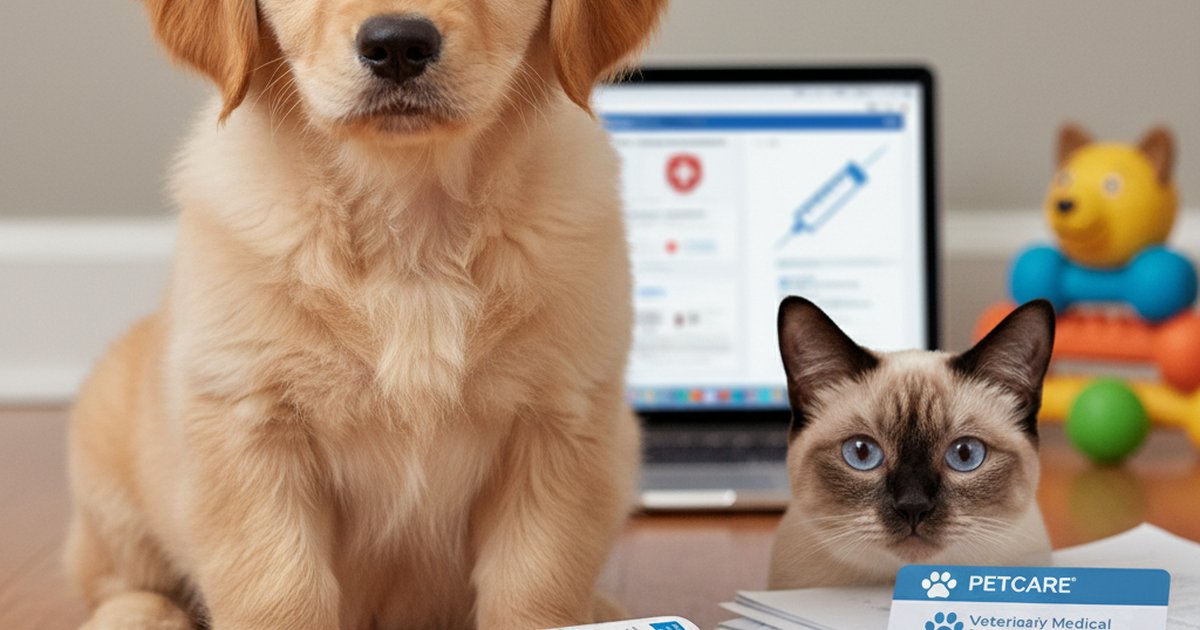
Scenario one: You just walked into your bathroom and found a chewed-up blister pack of your Gemtesa (vibegron) on the floor, and your dog is looking up at you with guilty eyes. You are panicking about whether they are going to die and how much the midnight trip to the emergency vet is going to cost.
Scenario two: Your senior dog has severe urinary incontinence. You are exhausted from scrubbing pee out of the couch, your house constantly smells like stale urine, and your vet just suggested an off-label prescription of Gemtesa to stop the leaking. Then you saw the price tag at the pharmacy and your jaw hit the floor.
I have been a veterinary assistant in high-volume, 24/7 animal hospitals for 15 years. I know the exact smell of that urine. I know the sheer panic of a toxicity ER run. And I know the heartbreaking reality of “economic euthanasia”—when an owner has to put their best friend to sleep simply because they cannot afford the medical care.
Let’s talk bluntly about what Gemtesa does to a dog’s body, what the vet bills actually look like, and how having the right pet insurance is the only way to protect your wallet and your pet’s life.
Scenario 1: The Midnight ER Run (Accidental Ingestion)
Gemtesa is a heavy-hitting human medication designed to treat overactive bladder. It works by relaxing the smooth muscle around the bladder so it can hold more urine.
When your 30-pound Goldendoodle eats a 75mg human tablet, that drug goes into overdrive. We aren’t just looking at bladder issues anymore. In the ER, we worry about severe cardiovascular side effects. The drug can cause extreme tachycardia (their heart beats so fast it can barely pump blood effectively), dangerous spikes in blood pressure, lethargy, and gastrointestinal stasis (where their gut just completely stops moving).
What Happens in the Treatment Room
When you rush through our ER doors at 2 AM with that chewed-up pill bottle, we move fast.
If you get to us within an hour or two of ingestion, we take your dog to the back and give them an IV injection of apomorphine. This forces them to vomit. It is not pretty, but it gets the undigested pills out of their stomach. Next, we force-feed them activated charcoal. Charcoal binds to the remaining toxins in the gut so they aren’t absorbed into the bloodstream. (Side note: I have scrubbed black, sticky charcoal off the clinic walls, my scrubs, and your dog’s face more times than I can count).
If the drug is already in their system, we have to admit them. We place an IV catheter, start flushing their system with fluids, and hook them up to an ECG monitor to watch their heart rhythm.
The Cost of the Chaos
This level of emergency care is expensive.
- Emergency Exam Fee: $150 - $250
- Emesis (Vomiting) & Charcoal: $200 - $400
- IV Catheter & Fluids: $150 - $300
- Overnight Hospitalization & ECG Monitoring: $800 - $1,500+
You are easily looking at a bill between $1,300 and $2,500 just because your dog was curious about a pill bottle.
If you have a pet insurance policy with companies like Lemonade, Pets Best, or Embrace, this entire nightmare is covered under their standard accident policies. You pay your deductible (usually $250), and the insurance reimburses you for 80% to 90% of the rest. You get to take your dog home and sleep soundly, rather than draining your savings account.
Scenario 2: The Desperate Prescription (Off-Label Use)
Now let’s talk about the chronic side of things.
Spay incontinence (Urethral Sphincter Mechanism Incompetence, or USMI) is incredibly common in female dogs. They literally cannot help it. While they are sleeping, the sphincter muscle relaxes, and urine just pours out. Your dog wakes up soaking wet, confused, and ashamed.
Worse than the mess on your rugs is what the urine does to your dog’s skin. Constant leaking causes “urine scalding.” The skin around their vulva and inner thighs gets raw, bright red, and severely infected. It is agonizing for them.
Usually, we start these dogs on standard veterinary drugs like Proin or Incurin. But sometimes, those drugs fail. The leaking won’t stop. In these refractory, desperate cases, a veterinary specialist might look to human medicine. They might prescribe a beta-3 adrenergic agonist like Gemtesa off-label to force the bladder muscle to relax and stop spasming.
The Pharmacy Sticker Shock
Here is the brutal truth: Gemtesa is a brand-name human drug. There is no cheap generic available right now. If your vet writes a prescription for your dog to take Gemtesa, you have to pick it up at a regular human pharmacy (like CVS or Walgreens).
Because your dog obviously does not have human health insurance, you are paying the cash price. That cash price is generally between $450 and $600 for a 30-day supply.
If your dog needs this medication for the rest of their life, you are looking at over $6,000 a year just to keep them from leaking urine. Very few families can afford that out of pocket.
How Pet Insurance Saves the Day
Will pet insurance pay for an expensive human drug like Gemtesa?
Yes, but with strict conditions. Providers like Trupanion and Nationwide are generally excellent at covering prescription medications, even human drugs used “off-label,” as long as a licensed veterinarian prescribes it for a covered medical condition.
If your dog develops incontinence after your insurance policy’s waiting period has passed, the insurance company will view it as a covered illness. Trupanion, for example, could cover 90% of that $600 monthly pharmacy bill for the rest of your dog’s life.
However, if your dog is already leaking urine before you buy the insurance, every single company will deny the coverage. It will be classified as a “pre-existing condition.” Pet insurance does not cover pre-existing conditions, period.
My Advice from the Trenches
I cannot count the number of times I have sat in an exam room with an owner who is sobbing over a financial estimate. They love their pet fiercely, but they simply do not have $2,000 for an emergency toxicity treatment, or $500 a month for a life-changing medication.
Economic euthanasia is a fancy, clinical term for a complete nightmare. You never want to be the person standing at the front desk, asking the vet tech if there is any cheaper way to save your dog’s life, knowing deep down there isn’t.
Do not wait until your dog eats your pill bottle. Do not wait until you find a puddle of urine on your bed.
Look into policies from Lemonade, Pets Best, or Trupanion today. For roughly $40 to $60 a month, you are buying the ultimate peace of mind. You are buying the ability to walk into my ER, hand me your dog, and say, “Do whatever it takes to fix them.”
That is the best feeling in the world for an owner, and frankly, it’s the best feeling for us in the clinic, too. Get the insurance. Your dog is worth it.
Frequently Asked Questions
Is Gemtesa toxic to dogs and cats?
Yes. Human doses of Gemtesa (vibegron) are massive for a pet. If your dog or cat gets into your pill bottle, it can cause extreme spikes in heart rate, severe blood pressure changes, and gastrointestinal blockages. Consider it a medical emergency and get to an ER immediately.
Will pet insurance pay for human medications prescribed to my dog?
Usually, yes. Providers like Trupanion, Embrace, and Lemonade typically cover human medications used 'off-label' in veterinary medicine, as long as your vet prescribed it for an illness that isn't considered a pre-existing condition.
What if I can't afford the ER bill right now?
If you're at the ER and don't have insurance, ask the front desk about CareCredit or Scratchpay to break up the payments. But please, once the dust settles, get a pet insurance policy so you never have to face that financial panic again.