Disclosure: This post contains affiliate links. We may earn a commission at no extra cost to you. Our research is independent and unbiased.
Editorial Note: Cost data in this article is sourced from published veterinary industry reports (NAPHIA, AVMA, VPI). This is an informational resource, not veterinary or financial advice. For health concerns, consult a licensed veterinarian.
German Shepherd Health Risks: Hip Dysplasia & Bloat Costs (2026)
German Shepherd health risks and 2026 vet costs: hip dysplasia ($6,000–$8,000 per hip), bloat surgery ($5,000+), and breed-specific cost data.

Independent Analysts
Find Breed Health Risk & Compare Coverage
Calculate realistic veterinary treatment costs and actuarial insurance reimbursement rates for your pet's exact breed.
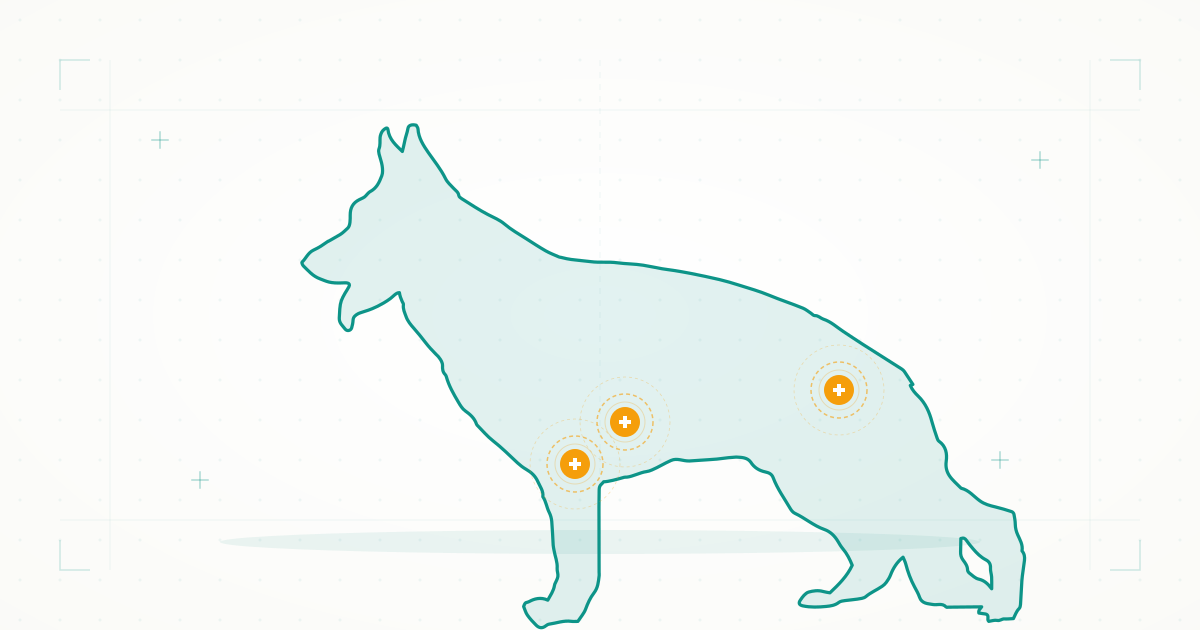
German Shepherd Health Risks and Insurance Considerations
German Shepherds are among the most loyal, intelligent, and versatile canine companions, widely utilized in working roles and as family protectors. However, their physical build and genetic background make them highly susceptible to severe and costly medical conditions. Breed health research shows that their deep chests and specific skeletal structures predispose them to orthopedic issues and acute, life-threatening emergencies. For owners, understanding these health risks is critical to ensuring timely veterinary intervention and managing potential financial burdens. Pet insurance covering breed-specific conditions can help — verify pre-existing condition clauses and breed exclusions before purchasing.
1. Hip Dysplasia: The Joint Destroyer
Due to genetic factors and historical breeding selection for specific aesthetic standards, such as a sloped backline, the hips of a German Shepherd are a major point of physiological vulnerability. Hip dysplasia is a hereditary developmental disorder wherein the ball-and-socket joint of the hip does not fit or develop properly, leading to friction and progressive cartilage deterioration. This constant grinding causes chronic joint inflammation, pain, and early-onset osteoarthritis.
Clinical Presentation and Symptoms
Recognizing the symptoms of hip dysplasia early is vital for initiating supportive care. Pet owners may observe several distinct behaviors at home:
- Bunny Hopping: The dog utilizes both rear legs together in a hopping motion when running or trotting.
- Stiffness and Hesitation: The dog shows reluctance when climbing stairs, climbing onto furniture, or rising from a resting position, particularly on slippery flooring.
- Audible Clicking: A clicking or popping sound may be heard from the hindquarters during normal walking.
- Weight Shifting: The dog shifts its weight forward to its front limbs, resulting in hindquarter muscle atrophy and compensatory muscle enlargement in the shoulders.
Long-Term Management and Surgical Costs
Managing hip dysplasia depends on the severity of the joint degeneration. In the early stages, conservative management strategies focus on weight control, low-impact exercise, hydrotherapy, joint supplements, and prescribed non-steroidal anti-inflammatory drugs (NSAIDs). Veterinary data indicates that these medical management efforts generally cost between $500 and $2,000 annually.
When conservative therapies fail, surgical intervention is required. The gold standard for severe cases is a Total Hip Replacement (THR), where the diseased joint is replaced with titanium and plastic prosthetic components.
- The Price Tag: Typically $6,000 to $8,000 per hip.
- Bilateral Risk: Because hip dysplasia is typically a bilateral condition, most affected dogs require surgical correction on both sides, bringing the total cost to $12,000-$16,000.
2. Gastric Dilatation-Volvulus (Bloat): The Emergency Risk
Gastric Dilatation-Volvulus (GDV), or bloat, is a rapid, life-threatening medical emergency. In German Shepherds, a deep, narrow chest cavity allows the stomach to expand with gas, food, or fluid, and subsequently rotate. This twist cuts off blood supply, leading to rapid tissue death and shock. Without immediate surgery, GDV is fatal within hours.
Clinical Warning Signs
Recognizing the symptoms of GDV immediately is crucial for survival. Key clinical signs include:
- Restlessness: Continuous pacing and heavy panting, indicating distress.
- Unproductive Retching: Repeated vomiting attempts that produce only white foam or saliva.
- Abdominal Distension: A visibly swollen, tight abdomen that feels resonant like a drum.
- Shock: Pale gums, rapid heart rate, and overall weakness.
Emergency Treatment and Surgical Estimates
GDV requires immediate emergency stabilization with intravenous fluid therapy and pain management, followed by decompression and surgery. The surgeon untwists the stomach and performs a gastropexy to secure it to the abdominal wall. If tissue necrosis has occurred in the stomach wall or spleen, partial resection is required.
- The Total Cost: Emergency stabilization and surgery ranges from $4,000 to $8,000.
- Prophylactic Gastropexy: Performing this preventatively—often during a routine spay or neuter—adds $500 to $1,500 but reduces the risk of a fatal gastric twist by 95%.
3. Degenerative Myelopathy: The Progressive Neurological Disease
Degenerative Myelopathy (DM) is a progressive, incurable neurological disease of the spinal cord highly prevalent in German Shepherds. Similar to ALS in humans, DM causes the myelin sheath protecting the spinal nerves to break down, disrupting signals between the brain and hind limbs, typically manifesting in dogs aged 8 to 14 years.
Disease Progression and Care Costs
The disease begins with mild coordination loss and dragging of the hind toes, wearing claws down unevenly. As it advances, it leads to severe hindlimb weakness, ataxia, and eventual complete paralysis, along with loss of bladder and bowel control.
There is no cure; management focuses on supportive care. Physical therapy and hydrotherapy cost approximately $50 to $100 per session, and custom canine wheelchairs run between $200 and $800.
4. Pet Insurance Strategy for German Shepherds
To manage the high costs of orthopedic surgeries and emergency medical care, structured financial planning is necessary. Pet insurance covering breed-specific conditions can help — verify pre-existing condition clauses and breed exclusions before purchasing.
Bilateral Conditions and Exclusions
Many policies contain bilateral exclusions. If a dog is diagnosed with hip dysplasia on one side, the insurer may exclude coverage for the opposite hip, categorizing it as a pre-existing condition. Seeking a policy without bilateral exclusions is crucial for breeds prone to bilateral joint disease.
Annual and Lifetime Coverage Limits
Low annual limits, such as a $5,000 cap, may be insufficient for a major medical crisis. A single emergency surgery for gastric dilatation-volvulus or a double total hip replacement can easily exceed these limits. Policies with higher limits—such as $15,000 annually or unlimited lifetime caps—are recommended.
Enrollment Timing
The optimal window for enrolling a German Shepherd in a pet insurance plan is between 8 and 10 weeks of age, prior to any veterinary documentation of joint laxity. Any pre-existing joint instability noted by a veterinarian will be permanently excluded from coverage.
Financial Summary
Ultimately, the lifetime cost of managing a German Shepherd’s hereditary health risks is substantial. Published surveys show that the average premium cost over five years is approximately $4,000. However, when faced with an emergency surgery costing $7,000 or more, active, comprehensive coverage prevents economic decisions from dictating care. Pet insurance covering breed-specific conditions can help — verify pre-existing condition clauses and breed exclusions before purchasing.
Data Sources
- NAPHIA Annual Report
- AVMA Pet Industry Statistics
- Breed health research publications
Find Breed Health Risk & Compare Coverage
Calculate realistic veterinary treatment costs and actuarial insurance reimbursement rates for your pet's exact breed.
Frequently Asked Questions
How much does hip replacement cost for a German Shepherd?
Total hip replacement (THR) for German Shepherds costs $6,000 to $8,000 per hip at specialist facilities. Because hip dysplasia is often bilateral, many owners face repeat surgery within 12-18 months. FHO (femoral head ostectomy) is a less expensive alternative at $1,200 to $2,000 but is less effective for large, active dogs.
Does pet insurance cover German Shepherd bloat (GDV)?
Most comprehensive accident and illness policies cover GDV surgery as an acute emergency. Because bloat develops suddenly without prior symptoms, it is typically not classified as a pre-existing condition. Verify waiting period terms, as some policies have a 14-day illness waiting period.
When should I enroll a German Shepherd in pet insurance?
Enrolling at 8-10 weeks is ideal before any health issues are documented. Early enrollment prevents exclusions for hip laxity or other conditions that veterinarians may note during puppy wellness exams.
Find Breed Health Risk & Compare Coverage
Calculate realistic veterinary treatment costs and actuarial insurance reimbursement rates for your pet's exact breed.