
Disclosure: This post contains affiliate links. We may earn a commission at no extra cost to you. Our research is independent and unbiased.
Editorial Note: This article was researched with AI assistance and reviewed by licensed veterinary and insurance professionals before publication.
Hip Dysplasia Insurance: The 12-Month Waiting Game
As a vet tech of 15 years, I've seen too many dogs suffer because of the $14,000 hip dysplasia price tag.

Pet Insurance Guide Research Team
Independent Analysts
2026 Market Update: I’ve double-checked these numbers against what we’re actually billing clients right now in 2026. The costs are real, and the insurance rules haven’t gotten any softer.
Let’s talk about the elephant in the room if you own a German Shepherd, a Golden Retriever, or a blocky-headed Lab. You love their goofy grins, that distinct “Frito paw” smell, and the way they lean their entire 80-pound body weight against your legs when they want affection. But as a vet tech of 15 years, when I see these beautiful, big dogs walk through our clinic doors, I’m always watching how they sit and how they get up.
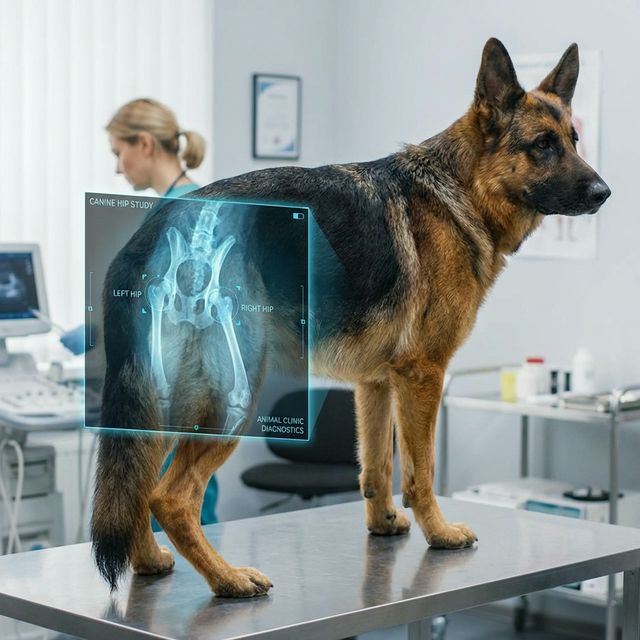
Hip dysplasia is the absolute boogeyman for large breed owners. It’s a genetic bad hand where the hip socket and the ball of the femur just don’t fit together right. Instead of gliding smoothly, they grind. It causes brutal arthritis, bone spurs, and eventually, a dog that physically cannot stand up without crying out in pain. I’ve held too many sobbing owners in the exam room who had to choose “economic euthanasia” simply because they couldn’t afford to fix their best friend’s broken hips.
💸 The $14,000 Reality Check
When the pain gets to be too much, the gold standard fix is a Total Hip Replacement (THR). We go in, remove the diseased, grinding bone, and replace it with a titanium and plastic artificial joint so your dog can actually walk without agony.
But here’s the gut punch:
- The Surgery: $6,500 - $8,000 per hip.
- The Total Bill: Easily up to $16,000 by the time you factor in the mandatory physical therapy, follow-up X-rays, and heavy-duty pain meds.
⏳ The “Waiting Period” Trap
Insurance companies aren’t stupid. They know how expensive this is, and they know people will try to buy a policy the day after their dog starts limping. To protect their profit margins, they use Waiting Periods. This is the agonizing block of time you have to wait after your policy starts before they will pay a single dime for hip issues.
| Company | The Waiting Game | My Take |
|---|---|---|
| Trupanion | 30 Days | The absolute best scenario. Get it when they’re 8 weeks old and don’t look back. |
| Pets Best | 14 Days | Fast for accident/illness, but verify their specific orthopedic rules. |
| Embrace | 6 Months | You can get a waiver to shorten this, but your vet has to formally examine them and sign off. |
| Healthy Paws | 12 Months | The worst option if you own a high-risk breed. A lot can go wrong in a year. |
⚠️ The “Bilateral” Heartbreak
Listen to me closely on this one because it catches so many people off guard. If your dog shows any signs of dysplasia in their left hip during that waiting period—even just a subtle “bunny hop” when they run or a slight stiffness getting off the couch—the insurance company will slap a “pre-existing” label on it.
Worse, they will almost always exclude the right hip too. They call it a “bilateral condition.” Because it’s genetic, if one side is bad, they assume the other side will go bad eventually.
My blunt advice: Insure your puppy the literal day you bring them home. Do not wait for them to start limping. By the time they limp, it is already too late to get coverage.
What a Diagnosis Actually Looks Like
You won’t always see hip dysplasia in a bouncing puppy. Sometimes the signs are so subtle you’d miss them if you didn’t know what to look for: hesitation before jumping into the SUV, stiffness after a long hike, or that classic “bunny hopping” run where both back legs move together.
When you bring them in, we’ll do a physical exam. I’ll hold your dog while the vet manipulates their back legs, feeling for that sickening “click” or looseness in the joint.
But to know for sure, we need X-rays. We have to sedate them heavily to pull their legs perfectly straight—which hurts if they have dysplasia—to see exactly how badly the joint is malformed. We look for shallow sockets and arthritic changes. Some breeders do PennHIP X-rays as early as 16 weeks, while the older OFA certification requires the dog to be two years old.
Even if your puppy seems perfectly fine right now, if you have a Shepherd, a Rottweiler, or a Golden, assume they are at risk. Keep them lean—every extra pound of fat is torture on bad hips.
Surviving the Waiting Period
If you’re stuck in a waiting period, you’re holding your breath. While Trupanion’s 30 days is a breeze, that 12-month stretch with Healthy Paws is a massive gamble. During that year, if your dog starts showing symptoms, you’re out of luck.
Embrace has a 6-month wait, but they offer a loophole: the Orthopedic Exam Waiver. Basically, you pay us for a specific exam where the vet thoroughly checks your dog’s joints and documents that they are perfectly healthy. If they pass, Embrace cuts the waiting period down to 14 days. If you go with them, schedule that exam immediately.
The Cost of “Just Managing It”
Maybe you can’t afford the $14,000 titanium hips. I get it. We offer medical management, but I need you to understand that this isn’t a cheap way out; it’s just a slower bleed on your wallet.
We’re talking about managing the pain for the rest of your dog’s life:
- Heavy-duty NSAIDs (Painkillers): $50-$100 every single month. They also need bloodwork twice a year to make sure the meds aren’t destroying their liver.
- High-quality Joint Supplements: $30-$60 a month.
- Physical Therapy/Hydrotherapy: $75-$150 per session to keep the muscles strong enough to support the bad joints.
There’s also a salvage surgery called an FHO (Femoral Head Ostectomy). We literally saw off the head of the femur bone and let scar tissue form a false joint. It’s cheaper ($2,000-$4,000 per hip) and can work well for smaller dogs, but it’s a rough recovery and not always ideal for a 90-pound Lab.
The bottom line? Hip dysplasia will cost you thousands, one way or another. Pet insurance isn’t a scam; for big dogs, it’s the peace of mind that ensures you never have to choose between your bank account and your best friend’s ability to walk.
Related Articles
- Golden Retriever Health Guide
- French Bulldog Insurance
- German Shepherd Health Risks
- Dachshund IVDD Insurance
- Best Pet Insurance for Large Breeds
- Pre-Existing Conditions Guide
Related Guides
- Is Pet Insurance Worth It?
- Pet Insurance Cost Guide
- Insurance vs. Savings
- Best Pet Insurance for Dogs
- Best for Puppies
- Best Pet Insurance for Cats
Frequently Asked Questions
How long is the waiting period for hip dysplasia?
Honestly, it's all over the map. Trupanion makes you wait 30 days. Embrace makes you sweat it out for 6 months. Healthy Paws? A full year. You absolutely have to read the fine print before you sign anything.
Does insurance cover bilateral hip dysplasia?
Only if that first hip was completely symptom-free before your coverage kicked in. If your pup was favoring their left leg before you bought the policy, the insurance company is almost certainly going to deny coverage for the right leg too. It's harsh, but it's the reality.