Disclosure: This post contains affiliate links. We may earn a commission at no extra cost to you. Our research is independent and unbiased.
Editorial Note: This article was researched with AI assistance and reviewed by licensed veterinary and insurance professionals before publication.
How to Stop Dog Chewing: A Vet's Guide to Saving Your Shoes and Your Sanity
From shredded sneakers to $5,000 emergency bowel surgeries, destructive chewing is a nightmare. A vet tech explains why dogs chew and how to actually stop it...

Dr. Sarah Chen
Licensed Veterinarian, DVM
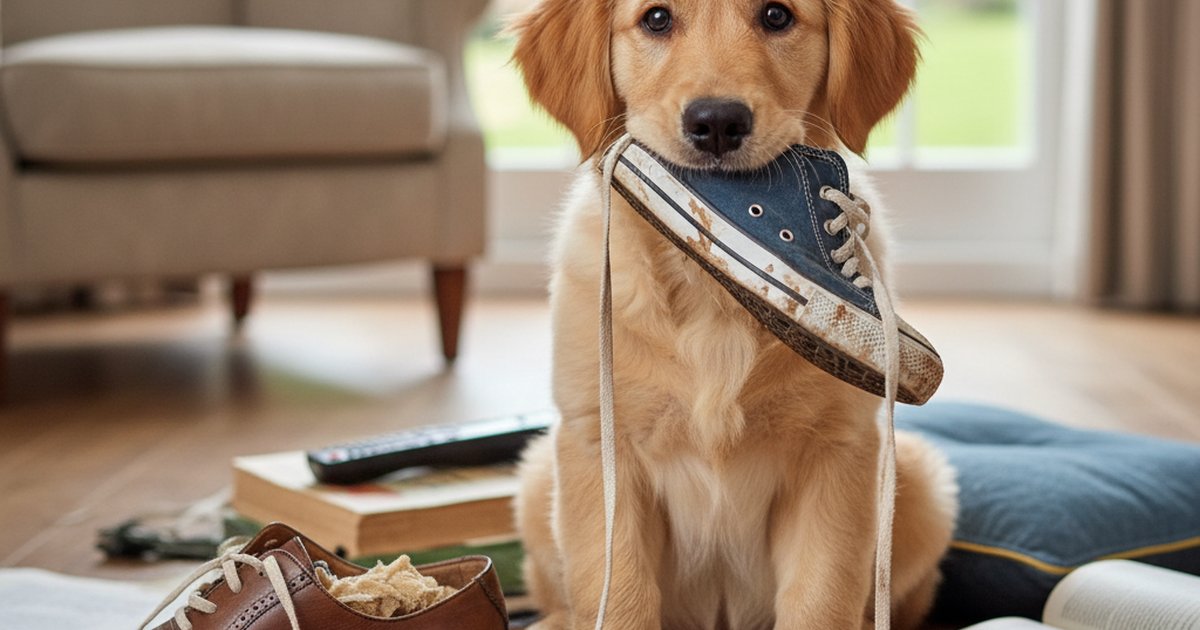
You come home from a long shift. You open the front door, and your heart sinks. Foam from your couch cushions looks like it snowed in the living room. Your favorite pair of shoes is shredded. And sitting in the middle of it all is your dog, looking either incredibly guilty or incredibly proud.
It’s infuriating. But as a vet tech who has spent 15 years in emergency animal hospitals, let me tell you what I see when I look at a chewed-up sneaker: I see a ticking time bomb. I don’t care about the shoes. I care about the heel of that shoe getting lodged in your dog’s intestines, causing the tissue to turn black and die.
Chewing is natural for dogs, but destructive chewing is a fast track to the ER. Let’s talk about why your dog is tearing your house apart, how to stop it, and why you need to protect yourself financially before they swallow something they shouldn’t.
Why Do Dogs Chew? The Real Reasons
Before we can fix the problem, we have to look at why it’s happening. Dogs don’t destroy your things out of spite. They chew because a basic need isn’t being met.
The Puppy Teething Phase
If you have a puppy between 3 and 6 months old, they are in pain. Their adult teeth are pushing through their gums, and chewing provides physical relief. It’s exactly like a human baby teething. They explore the world with their mouths, and everything—from your fingers to the baseboards—is fair game.
The Adult Dog Dilemma
When an adult dog is destroying your house, it usually boils down to a few blunt truths:
- They are bored out of their minds: If you don’t give a dog a job, they will invent one. And “interior demolition” is a very popular canine career choice.
- Separation anxiety: Some dogs panic when left alone. Chewing on things that smell heavily like you—like your shoes or underwear—is a way for them to self-soothe.
- Stress and fear: Thunderstorms, fireworks, or a chaotic household can push a dog to chew just to cope with the nervous energy.
- Medical issues: This is the one people miss. A dog with severe dental disease might chew to relieve the throbbing ache in their jaw. Dogs with GI issues might develop Pica, a compulsion to eat non-food items like rocks or socks.
The Ugly Reality of Chewing Emergencies
Let’s talk about the medical details. I’ve seen owners brought to tears—not because their dog destroyed a rug, but because they are staring at a massive estimate for emergency surgery they can’t afford.
When your dog swallows a piece of a toy, a sock, or a corncob from the trash, it doesn’t just pass through. It often gets stuck in the stomach or the intestines. We call this a foreign body obstruction. The intestines clamp down on the object, cutting off the blood supply. The surrounding tissue starts to necrose (die).
To fix this, we have to put your dog under heavy anesthesia, slice open their abdomen, cut into the intestines, pull out the rotting sock, and stitch it all back together. The risk of sepsis is incredibly high. The recovery is miserable for the dog.
And the cost? It’s brutal.
- Emergency Exam & X-rays: $350 - $1,300
- Foreign Body Surgery: $3,000 - $8,000+
- Hospitalization & IV Fluids: $1,000 - $3,000
I have held the hands of owners who had to choose “economic euthanasia”—putting their beloved dog to sleep simply because they didn’t have $6,000 laying around for surgery. It is the absolute worst part of my job.
How to Actually Stop Destructive Chewing
You need a plan that relies on prevention, not just punishment. Yelling at your dog after the fact does nothing but make them afraid of you.
1. Lock It Down
The absolute best way to stop your dog from chewing your stuff is to not leave your stuff out. Pick up your shoes. Close the bedroom doors. Use baby gates. Put your dog in a safe, size-appropriate crate when you aren’t home to supervise. If they can’t reach it, they can’t eat it.
2. Give Them the “Right” Things to Destroy
You can’t just tell a dog “no.” You have to give them a “yes.” Get heavy-duty rubber toys like KONGs, stuff them with wet food or peanut butter, and freeze them. Give them durable puzzle toys. A warning from the ER: Stay away from cooked bones (they splinter and pierce the stomach) and cheap rawhides (they cause massive blockages).
3. Wear Them Out
A tired dog is a good dog. A 10-minute walk around the block isn’t enough for most breeds. Get them running. Do short, focused training sessions to burn mental energy. If they are exhausted, they will sleep on the couch instead of eating it.
4. Interrupt and Redirect
If you catch them chewing the table leg, interrupt them with a sharp clap or an “Ah-ah!” The second they stop, hand them one of their approved toys. When they chew the toy, throw a party. Praise them heavily.
Why You Need Pet Insurance Right Now
Even if you do everything right, dogs are quick. I’ve seen a Labrador swallow a rock in the blink of an eye.
If you take one piece of advice from me, let it be this: get pet insurance before the accident happens. Plans from companies like Lemonade, Trupanion, or Embrace are the ultimate peace of mind.
If your dog needs a $6,000 emergency bowel surgery and you have a policy with a $500 deductible and 90% reimbursement, your out-of-pocket cost is around $1,050 instead of $6,000.
That difference means you get to tell the vet, “Do whatever it takes to save my dog,” instead of agonizing over your credit card limit. Get the insurance while your dog is young and healthy, because once they swallow that first sock, it becomes a pre-existing condition and no one will cover it. Protect your dog, and protect your wallet.
Related Articles
Related Guides
Frequently Asked Questions
Why did my adult dog suddenly start chewing everything?
If your grown dog suddenly starts tearing up the house, don't just assume they're acting out. I see this all the time—it's often a massive red flag for severe boredom, new anxiety, or an underlying medical issue like a hidden dental abscess or gut pain. Get them to a vet to rule out the medical stuff before you spend money on training.
Are chew deterrent sprays safe for dogs?
Bitter apple and cherry sprays are generally safe as long as you buy a reputable brand and never spray them directly on your dog. But honestly? They're just a band-aid. If you don't give your dog something better to chew on and address why they're chewing in the first place, they'll just find something else to destroy.
Does pet insurance cover behavioral training for chewing?
Usually, no. Your standard accident and illness plan isn't going to pay for a dog trainer to stop your pup from eating the couch. However, if the chewing is a verified symptom of a medical condition like severe anxiety, some higher-end plans with behavioral add-ons might cover vet-prescribed treatment. Always read the fine print of your policy.