
Disclosure: This post contains affiliate links. We may earn a commission at no extra cost to you. Our research is independent and unbiased.
Editorial Note: This article was researched with AI assistance and reviewed by licensed veterinary and insurance professionals before publication.
Luxating Patella Surgery Cost 2026: Price & Grades Explained
A vet tech's honest breakdown of luxating patella (floating kneecap) surgery in 2026. Get the real details on grades 1-4, what the surgery actually...

Pet Insurance Guide Research Team
Independent Analysts
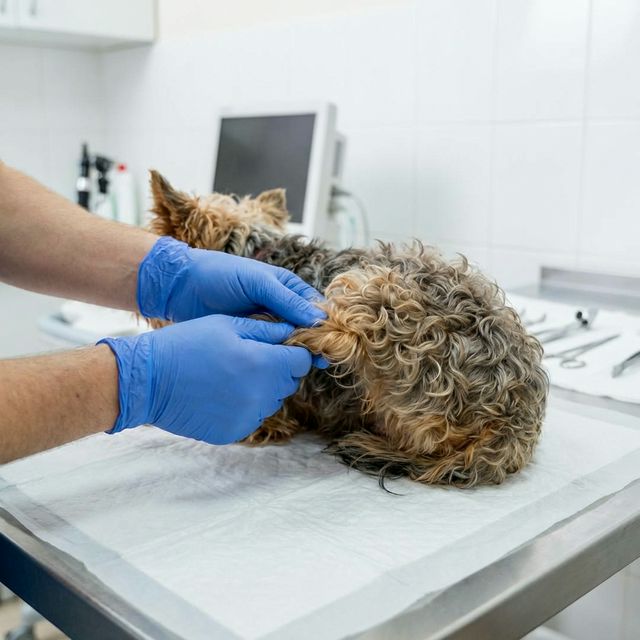
You’re walking your sweet little Yorkie or Pomeranian, and suddenly they do that little “skip.” They hold one back leg up for a few strides, look back at it, and then pop! They’re walking normally again.
It looks cute, almost like a quirky little hop. But as a vet tech of 15 years, let me tell you—that skip makes my heart sink. That is the telltale sign of a luxating patella, or a “floating kneecap.”
What’s actually happening? Your dog’s kneecap is supposed to ride smoothly up and down in a little groove on their thigh bone. In a lot of small breeds, genetics dealt them a bad hand: that groove is just too shallow. So, when they run or jump, the kneecap completely pops out of place. It rubs bone on bone, tearing up the cartilage. Every single time it pops out, it causes micro-damage that eventually leads to crippling, painful arthritis.
Small breeds are notorious for this. Chihuahuas, Frenchies, Poodles—they are orthopedically a hot mess sometimes. If your dog is diagnosed, you need to know what you’re in for. You can’t just ignore a bad knee. And fixing it isn’t cheap. I’ve sat in the clinic room too many times holding a crying owner’s hand because they just got a $4,000 estimate and have to decide between emptying their savings account or their dog’s ability to walk without pain. That’s why I am so blunt about getting pet insurance while your pup is still young and healthy—it buys you the peace of mind to just say “fix it” without panicking over the bill.
In 2026, you’re looking at an average of $3,200 per knee to fix a luxating patella.
💰 2026 Cost Breakdown: The Reality of the Bill
The price tags entirely depend on the “Grade” of the dislocation (how bad the joint is wrecked).
| Severity | Does it need surgery? | The Real Cost (Per Knee) |
|---|---|---|
| Grade 1 (Pops out rarely, goes right back in) | Rarely. We manage this with strict weight control and joint supplements. | N/A |
| Grade 2 (Pops out often, causes skipping) | Sometimes. It depends on how much arthritis is actively forming. | $2,000 – $3,000 |
| Grade 3 (Permanently out, but a vet can push it back in) | Yes. Your dog is hurting and walking funny all the time. | $2,800 – $4,000 |
| Grade 4 (Permanently out, stuck there) | Yes. The bone structure is actually twisted at this point. | $3,500 – $5,000 |
Tech Tip: If both knees are bad, your surgeon might recommend doing them both at the same time (bilateral surgery). It’s a brutal recovery for the dog, but it means going under anesthesia only once, and it’s cheaper—usually around $5,000 – $7,000 total instead of paying for two separate procedures.
🏥 The Surgery: What Are We Actually Doing to Your Dog?
We aren’t just popping the knee back into place. To fix this permanently, the surgeon has to physically alter the bone.
- Deepening the groove (Trochleoplasty): We literally shave out a deeper channel in the thigh bone so the kneecap has a deep pocket to sit in and can’t escape.
- Moving the anchor (Tibial Tuberosity Transposition): We cut the piece of shin bone where the knee tendon attaches and move it over so the whole mechanism pulls straight instead of crooked.
- Pinning it down: We use stainless steel pins and tension wires to lock that moved piece of bone into its new home while it heals.
It’s major orthopedic surgery. Your dog is going to wake up sore, groggy, and needing serious, dedicated nursing care from you at home.
🛡️ Insurance Coverage: The Fine Print
Because this is a genetic flaw built into the breed, it’s considered a hereditary condition.
- The Good: Most modern pet insurance policies will cover hereditary conditions. If you have insurance before the skipping starts, you’re golden.
- The Ugly Reality: Insurance companies are incredibly strict about knees. If your vet noted a “Grade 1” looseness in the left knee on a routine puppy exam before you bought your policy, the insurance company will likely deny coverage for the right knee later on, too. They call it a “bilateral exclusion” because it’s a systemic genetic issue.
- The Waiting Game: Almost every policy has a strict 6-month waiting period for orthopedic issues. You can’t sign up the day your dog starts limping and expect them to pay for surgery next week. Some companies will let you waive that 6-month wait if you pay your vet to do a specific “orthopedic exam” to prove the knees are perfect on day one.
❓ Frequently Asked Questions
Can a dog live with Luxating Patella without surgery?
If it’s a Grade 1, yes. Keep them lean—every extra pound of fat is extra stress on that bad knee. Give them high-quality joint supplements every single day. But if they are a Grade 3 or 4, absolutely not. I’ve seen dogs with untreated Grade 4 knees essentially walking on their front legs because the back ones hurt too much to bear weight. That’s not a fair life for a dog. Surgery is the only way to give them back their mobility.
Is recovery difficult?
I won’t sugarcoat it: yes. You are looking at 6 to 8 weeks of absolute, strict crate rest. No jumping on the couch, no running to the door when the doorbell rings, leash walks only to pee and poop. With a young, hyper Jack Russell or Yorkie, keeping them completely calm for two months will test your sanity. But if they jump and rip out those surgical pins, you’re back to square one and paying for a second surgery.
Related Guides
- Is Pet Insurance Worth It?
- Pet Insurance Cost Guide
- Insurance vs. Savings
- Best Pet Insurance for Dogs
- Best for Puppies
- Best Pet Insurance for Cats
Frequently Asked Questions
How much is luxating patella surgery?
">-" Costs range from $2,000 to $4,500 per knee. Bilateral surgery (both knees at once) may cost $4,000 to $7,000.
What is Grade 3 Luxating Patella?
">-" Grade 3 means the kneecap is permanently dislocated but can be pushed back in manually. It usually causes lameness and arthritis.
Is this condition covered by pet insurance?
">-" Yes, but it often has a 6-month orthpedic waiting period. It is considered a hereditary condition.