Disclosure: This post contains affiliate links. We may earn a commission at no extra cost to you. Our research is independent and unbiased.
Editorial Note: This article was researched with AI assistance and reviewed by licensed veterinary and insurance professionals before publication.
Nationwide Pet Insurance Login: A Vet Tech's Guide to Managing ER Claims
Sitting in the ER at 3 AM is not the time to forget your password. Here is how to access your Nationwide portal, submit claims, and get your money back fast.

Alex Carter
Veterinary Medicine Expert
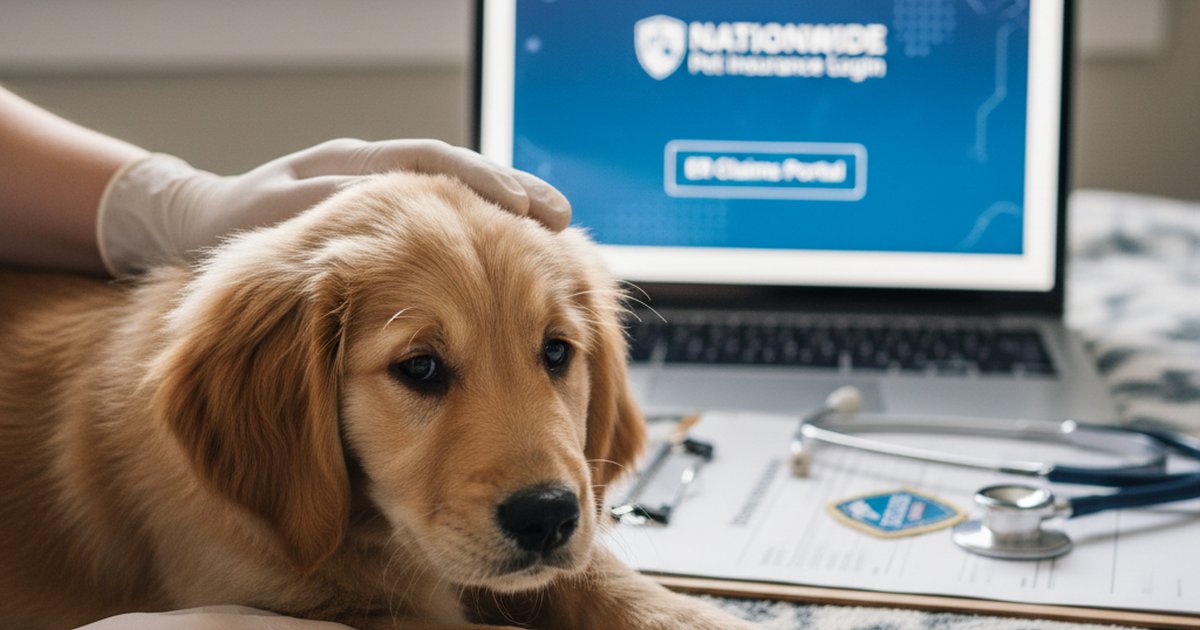
It’s 3:00 AM. The ER waiting room smells like a harsh mix of industrial bleach, wet dog, and pure panic. You’re sitting on a hard plastic chair while your dog is in the back on oxygen. A veterinary technician—someone exactly like me—walks through the double doors, sits next to you, and hands you an estimate for $4,500.
Your dog needs an emergency exploratory laparotomy. He swallowed a sock, and it’s currently strangulating his intestines. If we don’t cut him open, remove the necrotic (dead) bowel tissue, and stitch him back together, he won’t make it to sunrise.
You need to pay the deposit right now so we can start anesthesia.
Your hands are shaking. You pull out your phone, frantically typing “nationwide pet insurance login” into your browser. You need to know your deductible. You need to know your reimbursement rate. You need to know that if you put this $4,500 on your credit card, you aren’t going to default on your mortgage next month.
I have stood on the other side of that clipboard for 15 years. I have watched owners break down sobbing because they couldn’t remember their login, couldn’t verify their coverage, and had to choose between their wallet and their best friend. We call it “economic euthanasia,” and it is the ugliest, most soul-crushing part of veterinary medicine.
Having pet insurance is your safety net. But knowing how to use it, access it, and file your claims before you even leave the hospital parking lot is how you actually survive a medical crisis.
Here is the blunt, insider guide to managing your Nationwide pet insurance policy when things go wrong.
Accessing the Nationwide Pet Insurance Login
When your pet is bleeding or struggling to breathe, your brain goes into fight-or-flight mode. You will forget your passwords. You will forget your policy details.
Do yourself a favor right now: bookmark the Nationwide pet insurance login page (petinsurance.com) on your phone. Better yet, download the Nationwide Pet app (formerly VitusVet) and use biometric login (FaceID or fingerprint).
Once you are logged into the member portal, you have three immediate priorities during an emergency:
- Check Your Deductible: Have you met your $250 or $500 annual deductible yet? If not, subtract that from your expected reimbursement.
- Verify Your Reimbursement Rate: Most Nationwide Whole Pet plans reimburse at 50%, 70%, or 90%. Know this number before you sign my treatment estimate.
- Check for Exclusions: If you have a French Bulldog and you’re in the ER for heatstroke related to their flat face, verify that your policy covers Brachycephalic Airway Syndrome.
The Reality of Filing a Claim (From a Vet Tech’s Perspective)
Nationwide operates on a reimbursement model. Unlike Trupanion, which can pay the hospital directly at the checkout counter via their Vet Direct Pay software, Nationwide requires you to front the bill. You pay the $4,500 for the sock-removal surgery, and then you ask Nationwide for your money back.
To get your money back fast, you need to submit a flawless claim. Do not wait until you get home. Do it in the waiting room while your pet is in surgery.
What You Need to Upload
When you log into your account and hit “File a Claim,” the system is going to ask for documentation. As the person who generates your invoices, let me tell you exactly what the claims adjuster is looking for:
- The Itemized Invoice: Not the credit card receipt. We need the document that lists every single line item—the IV catheter placement, the Propofol for anesthesia, the surgical minutes, the pain medications (buprenorphine), and the overnight hospitalization fees.
- The Medical Records (SOAP Notes): This is the secret to getting paid quickly. Insurance companies want to prove this isn’t a pre-existing condition. Ask the front desk receptionist to print or email you the doctor’s exam notes. Upload these directly to the Nationwide portal along with your invoice.
If you only upload the receipt, Nationwide will email our hospital three days later asking for the records. Our front desk is swamped with critical patients, so it might take us a few days to fax them over. Suddenly, your reimbursement is delayed by two weeks. Upload the records yourself and cut out the middleman.
The Good and the Ugly of Nationwide’s Coverage
Since you’re logging into their system, you need to know exactly what kind of policy you bought. Nationwide has two very different types of plans, and I have watched owners get utterly blindsided at the checkout desk because they didn’t understand the difference.
The Whole Pet Plan (The Good)
If you log in and see you have the “Whole Pet” plan, you can take a deep breath. This operates like normal pet insurance (similar to Lemonade, Pets Best, or Embrace). You pay the vet, submit the invoice, and they reimburse you a straight percentage (usually up to 90%) minus your deductible. It’s transparent, and it covers almost everything from hereditary conditions to massive ER surgeries.
The Major Medical Plan (The Ugly)
If you log into your portal and see you have the “Major Medical” plan, you need to be very careful. This plan uses a “Benefit Schedule.”
A benefit schedule means Nationwide has a pre-determined maximum amount they will pay for a specific condition, regardless of what the vet charges. For example, if your male cat develops a urinary blockage—a horrific condition where crystals plug his urethra, causing toxins to build up until his heart stops—it costs about $2,500 to $3,500 to unblock him and hospitalize him for three days.
Under a benefit schedule, Nationwide might say, “We only pay a maximum of $800 for a feline urethral obstruction.” You are left paying the remaining $2,700 out of pocket.
If you have a Major Medical plan, log into your portal today, download the benefit schedule PDF, and look at the caps for common emergencies like torn ACLs, foreign body removals, and cancer treatments. If the caps are too low for your comfort, consider switching providers or upgrading.
Track Your Claim Like a Hawk
Once you submit your documents through the Nationwide pet insurance login, keep an eye on the status tab.
Insurance companies are massive bureaucracies. Sometimes a claim gets flagged because a line item on the invoice looks weird to the adjuster. If you see your claim sitting in “Pending” for more than five days, call them.
Often, they just need us (the vet hospital) to clarify something. For instance, if we billed for “Cytopoint” (an allergy injection) but the doctor forgot to write “allergies” in the official diagnosis code, the claim might stall. If you call and find that out, you can call our hospital, and I can have the vet amend the record in five minutes.
The Bottom Line
We hate talking about money in the ER. We want to be in the back, placing IVs, pushing life-saving medications, and holding your pet’s paw as they wake up from anesthesia. We don’t want to be haggling over deposits.
Pet insurance is the only reason thousands of animals walk out the front doors of my hospital instead of leaving in a body bag.
Familiarize yourself with your Nationwide pet insurance login before the emergency happens. Know your coverage. Save your login details. When the worst day of your pet’s life happens, the only thing you should be focused on is giving them a kiss on the nose and telling them they are going to be okay. Let the portal handle the rest.
Frequently Asked Questions
How do I submit a claim through the Nationwide portal?
Log into your account, hit 'Submit a Claim,' and upload a clear photo of your itemized invoice. As a vet tech, I highly recommend asking the front desk for your pet's complete medical records (SOAP notes) for the visit and uploading those too. It stops Nationwide from pausing your claim to request them later.
Does Nationwide pay the vet hospital directly?
Generally, no. You pay us up front, and Nationwide reimburses you after you submit the claim through your portal. If you need direct vet payments, you should look into Trupanion, which has software that pays the hospital directly at checkout.
Why is my Nationwide claim taking so long?
Usually, it's missing medical records. If you just upload the receipt, the adjusters don't know the medical context of the treatment. Log back into your Nationwide pet insurance login, check the claim status, and see if they are waiting on doctor notes.