Disclosure: This post contains affiliate links. We may earn a commission at no extra cost to you. Our research is independent and unbiased.
Editorial Note: This article was researched with AI assistance and reviewed by licensed veterinary and insurance professionals before publication.
Reimbursement Vs Direct Vet Pay Insurance Which Is Better For Emergencies: Comprehensive Guide
A blunt look from a vet tech at reimbursement versus direct vet pay pet insurance. Learn how to avoid the 'credit card gap' during a 2 AM emergency.

Dr. Sarah Chen
Licensed Veterinarian, DVM
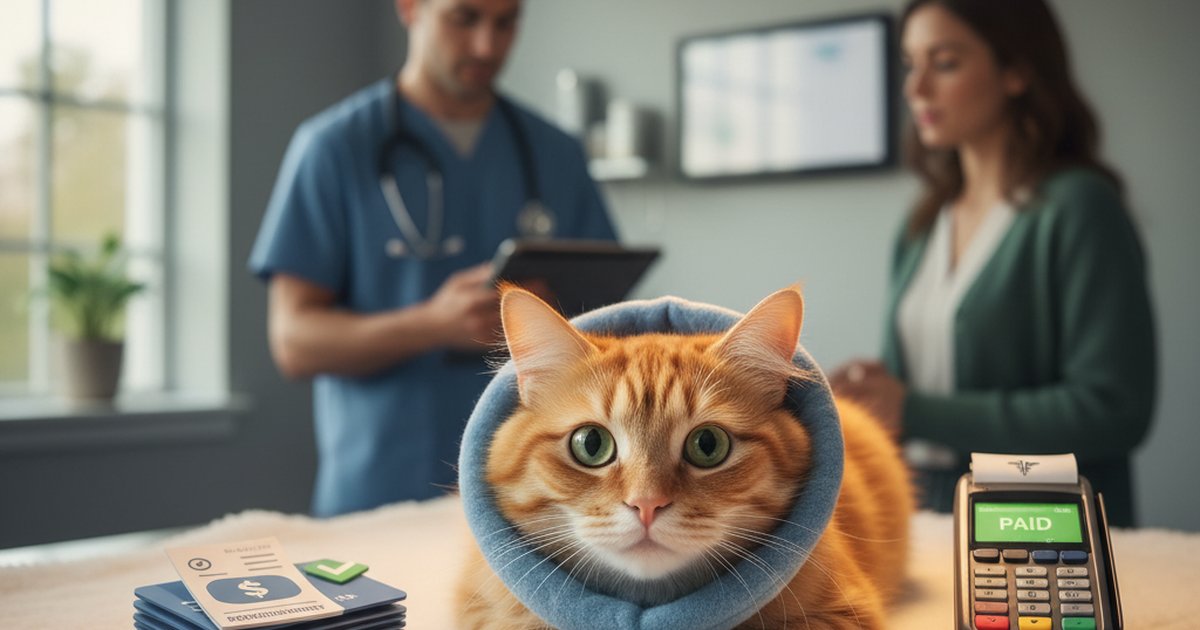
It’s 2:00 AM. Your dog is pacing, panting heavily, and suddenly his stomach looks like a swollen drum. Or maybe your cat has been straining in the litter box for hours, crying out in pain, and now there’s a drop of bloody urine on the bathroom rug.
You rush to the ER. The harsh smell of bleach and fear hits you the second you walk through the sliding doors. We take your pet to the back treatment area, and then the front desk slides a clipboard across the counter.
$6,000 to untwist your dog’s dying stomach (GDV). $3,000 to unblock your cat’s urethra before his bladder literally ruptures.
And here is the kicker: they need a 50% to 100% deposit. Right now. Before the surgeon even scrubs in.
This is the ugliest side of veterinary medicine. In the clinic, we call it the “credit card gap.” It is that agonizing moment when an owner has pet insurance, but they don’t have the $3,000 available limit on their Visa to get the life-saving surgery started. It leads to economic euthanasia—putting a fixable, loved pet to sleep simply because the cash isn’t there at the exact moment it’s needed.
That is why how your insurance pays matters just as much as what it covers. Let’s break down Reimbursement versus Direct Vet Pay, straight from someone who processes these bills every day.
The Standard: Reimbursement (The “Pay Now, Wait Later” Model)
About 90% of pet insurance companies (like Lemonade, Embrace, Spot, and Nationwide) work this way. It functions a lot like car insurance.
How it actually goes down:
- The Emergency: Your Golden Retriever eats a sock. It’s lodged in their intestines, cutting off blood supply and rotting the tissue. They need a $4,500 foreign body surgery to cut open the bowels and pull out that crusty tube sock.
- The Bill: You hand over your credit card for the full $4,500 at the ER front desk.
- The Paperwork: You take pictures of the six-page itemized invoice and upload it to an app while sitting in the waiting room, exhausted.
- The Payout: Anywhere from two to fourteen days later, the insurance company direct-deposits 80% or 90% of that money back into your checking account.
The Good and The Bad
- The Good: You can go anywhere. You can use the absolute best, most expensive boarded surgeon in the state. They don’t care what insurance you have because you are paying them directly. Your monthly premiums are also usually cheaper.
- The Bad: The Cash Flow Nightmare. If your credit card is maxed out, or your debit card gets declined, you are stuck. You have to foot the entire bill yourself before the insurance company steps in.
The Alternative: Direct Vet Pay (The “We Got You” Model)
This is what human health insurance does. Trupanion is the heavy hitter in this space, though a few others try to offer versions of it.
How it goes down (when it works right):
- The Emergency: Same sock, same rotting intestines, same $4,500 surgery.
- The Checkout: The clinic has Trupanion’s software installed on their front desk computers.
- The Magic: The receptionist clicks a few buttons. Trupanion’s system instantly says, “Yep, we’ll cover $4,050.”
- Your Cost: You pay your $450 deductible/copay right there. That’s it. Your dog goes to surgery. No maxed-out credit cards, no waiting for a check to clear.
The Catch (And It’s a Big One)
Direct pay is an absolute lifesaver—if your vet takes it.
I cannot stress this enough: Not every ER clinic has Trupanion’s software. If you drag your dying dog into a clinic at 3 AM and they don’t have the system set up, guess what? You are right back to paying the full $4,500 upfront and waiting for a reimbursement check.
Some companies like Pets Best offer a manual “Assignment of Benefits” where you call them, and they email a form to the vet. Let me tell you a secret from the ER floor: at 3 AM, when we have four critical patients crashing in the back, the front desk is not waiting on hold with an insurance company to get a fax signed. We will demand your credit card.
Which One Do You Actually Need?
I don’t care what breed you have; I care about your bank account. Be painfully honest with yourself about your finances.
Get Direct Pay (Trupanion) if:
- You live paycheck to paycheck.
- You do not have a credit card with a $5,000+ limit sitting at a zero balance.
- Most Importantly: You have physically called your local 24-hour emergency vet and confirmed they actively use Trupanion direct pay.
Get Reimbursement (Lemonade, Embrace, Spot) if:
- You have the cash or credit limit to front a massive bill without missing rent.
- You want the lowest possible monthly payment.
- You live in a rural area or use a vet who refuses to deal with insurance companies.
- You use CareCredit (a specific medical credit card) to bridge the gap. You put the $4,500 on CareCredit, get your reimbursement check a week later, and pay off the card before the promotional interest hits.
The Bottom Line
As a vet tech who has held the paws of way too many animals during economic euthanasias, I beg you to get some form of coverage. Direct pay saves lives because it removes the panic and hesitation at the front desk. It lets us get straight to saving your pet. But if your local ER doesn’t accept it, it’s just a fancy feature you can’t use.
Do your homework, call your local emergency clinic, and pick the safety net that actually catches you.
FAQ
Is pet insurance worth it for reimbursement vs direct vet pay insurance which is better for emergencies? Look, if you don’t have $5,000 sitting in your checking account right now, it’s worth it. It’s the difference between treating your best friend and having to say goodbye because you can’t swing the upfront bill.
How much does pet insurance cost? It depends on your zip code and your pet’s breed. A young mixed breed might be $30 a month. A Frenchie with a history of breathing issues? You’re going to pay a lot more. But it beats a $7,000 surgery bill at 3 AM.
Related Articles
- (Links to related articles will appear here)
Related Guides
- (Links to related guides will appear here)
Frequently Asked Questions
Is pet insurance worth it for reimbursement vs direct vet pay insurance which is better for emergencies?
Look, if you don't have $5,000 sitting in your checking account right now, it's worth it. It's the difference between treating your best friend and having to say goodbye because you can't swing the upfront bill.
How much does pet insurance cost?
It depends on your zip code and your pet's breed. A young mixed breed might be $30 a month. A Frenchie with a history of breathing issues? You're going to pay a lot more. But it beats a $7,000 surgery bill at 3 AM.