
Disclosure: This post contains affiliate links. We may earn a commission at no extra cost to you. Our research is independent and unbiased.
Editorial Note: This article was researched with AI assistance and reviewed by licensed veterinary and insurance professionals before publication.
Is Pet Insurance Worth It for a 12-Year-Old Cat? (Real Math)
A vet tech breaks down the real cost of senior cat care—from kidney crashes to hyperthyroidism—to help you decide if insurance still makes financia...

Pet Insurance Guide Research Team
Independent Analysts
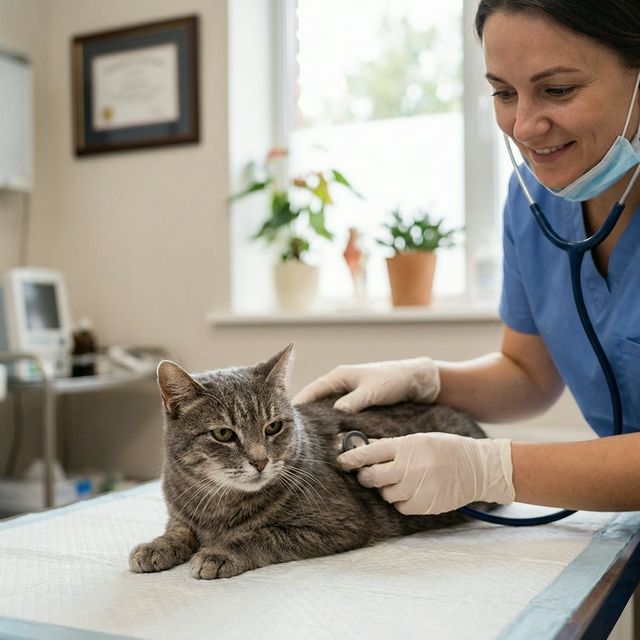
I’ve spent 15 years working the floor in a high-volume emergency animal hospital, and let me tell you about 12-year-old cats. They are masters of hiding when they feel awful. You think they’re just sleeping more because they’re old, or maybe they’re drinking out of the dog’s bowl because they’re being quirky. Then, one Tuesday at 2 AM, they completely crash, and you’re standing in my triage room holding a limp cat that smells vaguely of urine and sweet breath.
I get asked all the time: “My cat is 12 and seems perfectly healthy. Should I still bother with insurance?”
The blunt truth? It comes down to the math and your stomach for risk. Senior cats don’t just get a little sick; they get the “Big Three”—Kidney Disease, Diabetes, and Hyperthyroidism. And fixing those isn’t cheap.
The Reality of Insuring a Senior Cat
Let’s not sugarcoat it. Insuring a 12-year-old cat is expensive. You aren’t getting those $20/month kitten rates.
- Your Monthly Bill: Expect $60 to $90.
- The Deductible: You’ll probably have to swallow the first $500+ of vet bills.
- Your Share: You’ll still pay 20% to 30% of the final invoice.
You’re essentially committing to spending $800 to $1,000 a year just to hold the policy.
The Cost of the “Big Three” Crises
Now, let’s look at what happens when you don’t have that policy, and your cat winds up on my exam table.
1. Chronic Kidney Disease (CKD)
Most cats will experience some level of kidney failure if they live long enough. Their kidneys literally shrink and turn into little raisins, unable to filter toxins out of their blood.
- Finding Out (Bloodwork & Ultrasound): $500 - $800 just to tell you what’s wrong.
- Keeping Them Going (Subcutaneous Fluids & Meds): $100 - $200 a month. You’ll be jabbing a needle under their skin at home to keep them hydrated.
- The ER Crash: $2,000 - $4,000. When they stop eating and start vomiting, we have to hospitalize them on continuous IV fluids for days to flush the poisons out of their system.
2. Hyperthyroidism
Their thyroid gland goes into overdrive, usually because of a benign tumor. They eat like starving wolves but lose weight until they look like walking skeletons, and their heart beats so fast it can literally give out.
- The Cure (Radioactive Iodine Treatment - I-131): $1,500 - $2,500. We inject them with radioactive material that destroys the bad tissue. It’s a one-and-done cure, but it hurts the wallet.
- The Band-Aid (Methimazole): $40 a month for the rest of their life. You’ll be wrestling a pill or rubbing ointment into their ear twice a day forever.
3. Cancer (Often Lymphoma)
- Chemotherapy: $3,000 - $6,000. It can give them months or a year of good quality life, but it’s a massive financial commitment.
- Surgical Removal: $2,000+.
Let’s Do the Math: The Break-Even Point
If your old guy defies the odds and stays perfectly healthy until he passes quietly at 15, you’ve handed the insurance company about $3,000 for absolutely nothing.
But let’s look at a realistic scenario. Say your cat develops Hyperthyroidism at 13 (you opt for the $2,000 I-131 cure so you don’t have to pill him). A year later, his kidneys crash and he spends the weekend in my ICU ($3,000). Your total vet bills are $5,000.
- With Insurance: You paid your premiums ($1,000/yr), hit your deductible ($500), and covered your 20% co-pay ($1,000). Total out of your pocket: $2,500.
- Without Insurance: You’re putting $5,000 on CareCredit.
You saved $2,500 and, more importantly, you didn’t have to base a life-or-death decision on your bank account balance. I’ve seen too many owners choose “economic euthanasia” simply because they couldn’t afford the $3,000 ICU stay. Insurance prevents that heartbreak.
When I Tell People to SKIP Insurance
I’ll be straight with you. Do not buy a policy for a 12-year-old cat if:
- They are already sick. If your regular vet has already diagnosed kidney disease, a heart murmur, or diabetes, do not bother. The insurance company will dig through your vet records, see the pre-existing condition, and deny every claim related to it.
- You have real cash on hand. If you can casually write a check for $3,000 without missing a mortgage payment, self-insuring is probably smarter. Take that $80 a month and put it in a high-yield savings account dedicated solely to your cat.
Best Options if You Decide to Buy
If you’re going for it, stick with companies that don’t punish you for having an older pet. Spot and Embrace are the ones I see actually paying out for senior pets without dropping coverage or arbitrarily slashing limits just because your cat hit their golden years.
Related Articles
- Indoor Cat Insurance Worth It
- Best Insurance for Senior Cats
- Cat Insurance 101
- Pre-Existing Conditions Guide
- Best Pet Insurance Companies 2026
- Pet Insurance ROI Analysis
Related Guides
- Is Pet Insurance Worth It?
- Pet Insurance Cost Guide
- Insurance vs. Savings
- Best Pet Insurance for Cats
Frequently Asked Questions
Is it too late to get pet insurance for my senior cat?
Look, it's not too late if your old timer is completely healthy right now. But let me be straight with you: you're going to pay for it. Expect $60 to $90 a month, and the second a vet notes a sniffle in their chart, that condition is locked out.
Does pet insurance cover kidney disease in cats?
Only if you buy the policy *before* their kidneys start failing. In the ER, I see owners crying because they bought insurance the day after their vet said the bloodwork looked "a little off." If there's a record of it, it's pre-existing, and you're paying out of pocket.
What's the best pet insurance for older cats?
From what comes across our clinic's desk, Spot and Embrace actually step up for the seniors. They don't suddenly slash your coverage or age out your cat just because they've got some miles on them.