Disclosure: This post contains affiliate links. We may earn a commission at no extra cost to you. Our research is independent and unbiased.
Editorial Note: Cost data in this article is sourced from published veterinary industry reports (NAPHIA, AVMA, VPI). This is an informational resource, not veterinary or financial advice. For health concerns, consult a licensed veterinarian.
Great Dane Insurance: 37% Bloat Risk & $5,000 Emergency Surgery (2026)
I'll give you the hard truth: Great Danes are the #1 breed for fatal bloat.

Independent Analysts
Find Breed Health Risk & Compare Coverage
Calculate realistic veterinary treatment costs and actuarial insurance reimbursement rates for your pet's exact breed.
Great Dane Insurance: The “Heartbreak Breed”
Great Danes are celebrated for their gentle disposition and majestic size. However, veterinary data indicates they face severe, life-limiting health challenges, resulting in a short average lifespan of six to eight years. Medical emergencies in giant breeds escalate rapidly. Published surveys show that sudden emergency veterinary bills frequently force difficult choices when owners cannot front a $5,000 surgical cost. For families welcoming a Great Dane, securing a comprehensive insurance policy is key to managing these unpredictable expenses. Pet insurance covering breed-specific conditions can help — verify pre-existing condition clauses and breed exclusions before purchasing.
The Bloat Crisis: 37% Lifetime Risk
Understanding Gastric Dilatation-Volvulus (GDV)
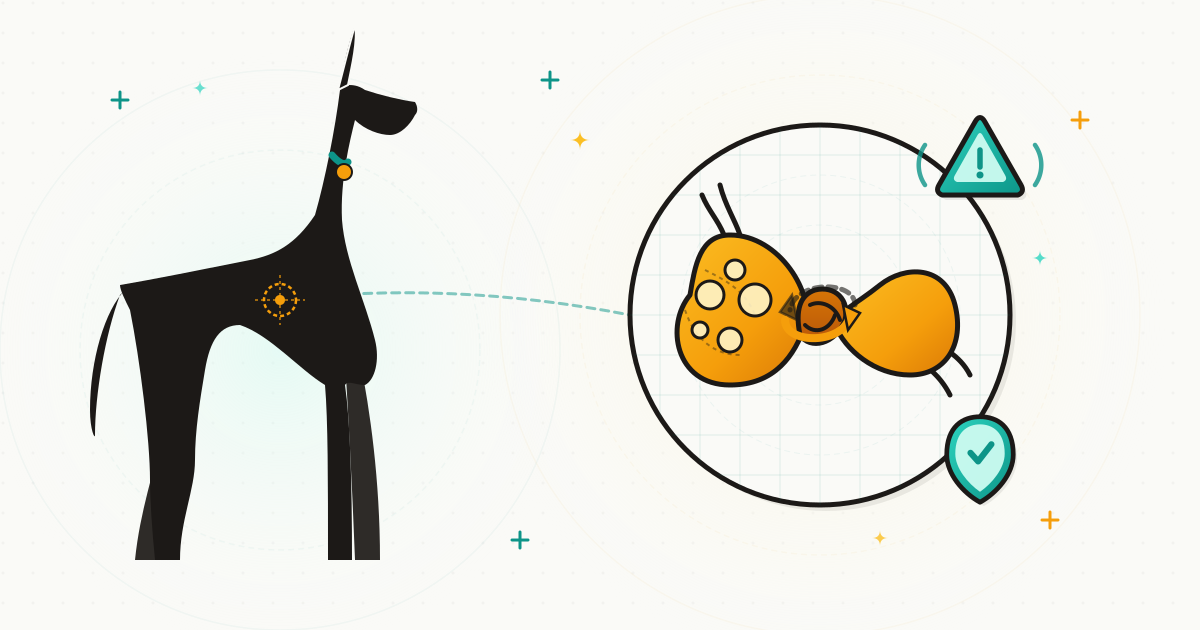
Gastric Dilatation-Volvulus (GDV), or bloat, occurs when the stomach fills with gas and twists along its axis. This cuts off blood supply to the stomach and spleen, causing tissue death.
Veterinary data indicates that the progression of GDV is rapid:
- Hour 1: Restlessness, pacing, drooling, and unproductive retching.
- Hour 2: Swelling of the abdomen, weakness, or collapse.
- Hour 3: Oxygen deprivation, tissue death, and organ failure. Emergency surgery is required.
Even with rapid surgical intervention, veterinary data indicates that only 50% to 60% of Great Danes survive a severe bloat episode.
The Real Cost of Bloat Treatment
Treating GDV is highly expensive, especially outside of standard hours:
- Emergency Surgery: $3,000 to $7,000 to untwist the stomach and remove necrotic tissue.
- ICU Stay: $1,000 to $2,000 for three to five days of monitoring, fluids, and heart stabilization.
- Surgical Complications: Splenectomy (if the spleen is compromised) adds $2,000 to $5,000.
A single emergency bloat episode can result in a total invoice ranging from $5,000 to $10,000. Standard pet insurance policies typically cover GDV as an emergency illness, provided the condition is not pre-existing.
Prevention: Prophylactic Gastropexy
To mitigate the risk of GDV, veterinary data indicates that a prophylactic gastropexy is highly recommended. A prophylactic gastropexy ($500 to $1,500) permanently tacks the stomach to the abdominal wall to prevent twisting. Typically performed during spay or neuter surgeries under anesthesia, breed health research shows it reduces twist risk by 95%. Wellness plans may assist with the cost. Pet insurance covering breed-specific conditions can help — verify pre-existing condition clauses and breed exclusions before purchasing.
Dilated Cardiomyopathy (DCM): The Silent Killer
Pathophysiology and Diagnostics
Dilated Cardiomyopathy (DCM) is a genetic cardiac disease where the heart muscle thins and weakens, leading to congestive heart failure. Often asymptomatic early, symptoms include a soft cough, exercise intolerance, lethargy, fainting, or sudden collapse.
Diagnosing DCM requires specialized evaluations. Veterinary data indicates diagnostic costs of $400 to $800 for an echocardiogram (cardiac ultrasound) and $300 to $500 for a Holter monitor (24-hour EKG).
Ongoing Management Costs
Once diagnosed, managing DCM is a chronic, lifelong requirement. The monthly medication regimen typically includes Pimobendan ($150 to $250), Enalapril ($50 to $100), and Lasix ($30 to $60). Ongoing expenses range from $250 to $400 per month for one to three years. Pet insurance covering breed-specific conditions can help — verify pre-existing condition clauses and breed exclusions before purchasing.
The Giant Breed “Weight Tax”
Veterinary medicine scales costs directly with patient weight. A Great Dane weighing 110 to 180 pounds requires higher doses of medications, larger supplies, and more clinical staff to handle:
- Anesthesia: Maintaining anesthesia for a giant breed requires substantial drugs, increasing base fees.
- Medications: Triple the dose means triple the pharmacy cost for antibiotics, pain relievers, and anti-inflammatory medications.
- X-rays: Large plates and multiple views cost $200 to $400.
- End-of-Life Care: Private cremation fees cost $300 to $600.
Pet Insurance: Financial Planning for Great Danes
The Probability of Financial Exposure
Breed health research shows that approximately 37% of Great Danes will develop GDV during their lifetime, representing a 1 in 3 chance of an unexpected emergency. Paying $6,000 to $9,000 in premiums between ages 2 and 7 compared to a sudden $7,000 emergency bill shows a clear financial advantage. Pet insurance covering breed-specific conditions can help — verify pre-existing condition clauses and breed exclusions before purchasing.
Key Policy Features
When evaluating plans, prioritize:
- Unlimited Annual Limits: Giant breed treatments easily exceed standard caps; a $5,000 cap is often insufficient.
- Direct Vet Pay: Providers that pay clinics directly avoid large upfront out-of-pocket costs.
- Congenital/Hereditary Coverage: Policies must cover DCM, hip dysplasia, and GDV.
Pet insurance covering breed-specific conditions can help — verify pre-existing condition clauses and breed exclusions before purchasing.
Case Study: Financial Impact of Breed-Specific Illnesses
A historical case study of a Great Dane named Zeus illustrates these cumulative costs:
- Age 4: Emergency GDV surgery and ICU care totaled $6,500.
- Age 6: DCM diagnosis and cardiac medications ($300/month for two years) totaled $7,200.
- Total Medical Bills: $13,700.
Pet insurance covering breed-specific conditions can help — verify pre-existing condition clauses and breed exclusions before purchasing. In this instance, the owner’s policy reimbursed $12,330 (90%), reducing the out-of-pocket expense to $1,370, alongside $4,800 paid in premiums. Without coverage, the owner indicated euthanasia would have been the only option.
Frequently Asked Questions
How much does pet insurance for a Great Dane typically cost? Veterinary data indicates average monthly premiums range from $80 to $130 due to elevated risks of high-cost hereditary conditions and a short lifespan of six to eight years.
Does pet insurance cover prophylactic gastropexy? Standard plans do not cover preventative gastropexy. However, pet insurance covering breed-specific conditions can help — verify pre-existing condition clauses and breed exclusions before purchasing. Some wellness riders can reimburse a portion of the cost.
Are hereditary conditions covered by insurance? Yes, most modern policies cover hereditary and congenital conditions, including hip dysplasia and DCM, if active before clinical signs or diagnosis.
What is the primary cause of mortality in Great Danes? Published surveys show that Gastric Dilatation-Volvulus (GDV/bloat) and Dilated Cardiomyopathy (DCM) are the leading causes of non-accidental mortality.
The Bottom Line: Secure Coverage Before Age Two
Veterinary data indicates enrolling a Great Dane before age two is ideal. GDV can occur as early as one year of age, and DCM typically manifests between ages four and six. Enrolling early ensures these conditions are not excluded as pre-existing. Remaining uninsured requires maintaining a dedicated savings account of $10,000 to $15,000, or facing euthanasia during a catastrophic emergency.
Action Step: Compare rates from multiple pet insurance providers. Pet insurance covering breed-specific conditions can help — verify pre-existing condition clauses and breed exclusions before purchasing.
Data Sources
- NAPHIA Annual Report
- AVMA Pet Industry Statistics
- Breed health research publications
Find Breed Health Risk & Compare Coverage
Calculate realistic veterinary treatment costs and actuarial insurance reimbursement rates for your pet's exact breed.
Frequently Asked Questions
How much is Great Dane insurance?
">-" Honestly, it's going to run you $80-$130 a month. Because they're giant breeds with a short 6-8 year lifespan, they're hit hard and fast by bloat, heart failure, and bone cancer. The premiums reflect those massive emergency vet bills.
Do Great Danes need prophylactic gastropexy?
">-" Absolutely. I tell owners to get their dog's stomach tacked to the body wall during their spay or neuter. It's a $500-$1,500 procedure that stops the stomach from twisting and cuts their bloat risk by 95%.
What is the #1 killer of Great Danes?
Bloat (GDV) and dilated cardiomyopathy (DCM). Both conditions can appear suddenly — GDV requires emergency surgery within hours, while DCM progresses silently before causing sudden cardiac events. Veterinary cardiologists recommend baseline cardiac screening for Great Danes starting at age 2.
Find Breed Health Risk & Compare Coverage
Calculate realistic veterinary treatment costs and actuarial insurance reimbursement rates for your pet's exact breed.